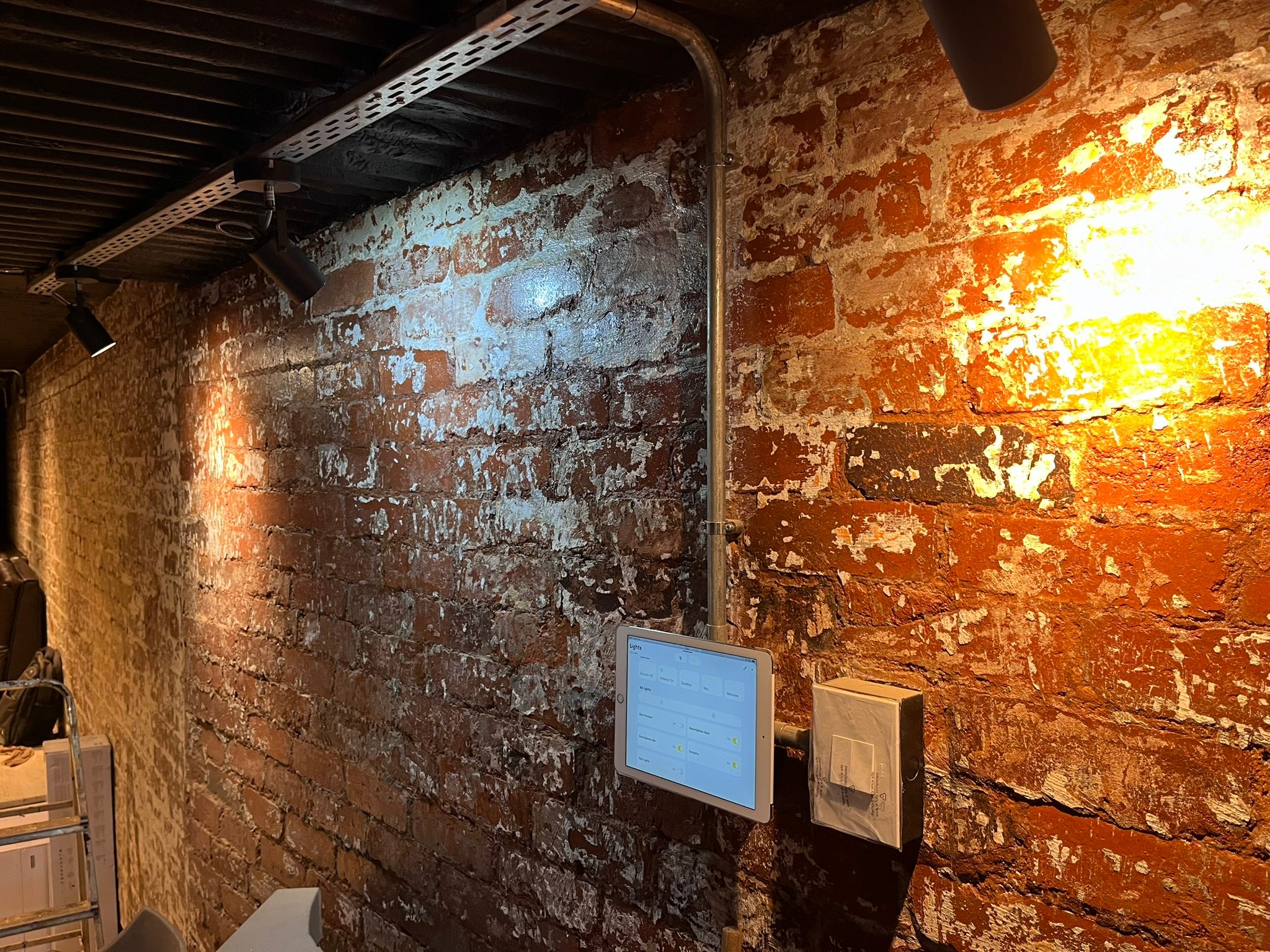
A smart home interface can be technically correct and still wrong for the family.
The rooms may be named properly. The buttons may work. The logic may be clean. But if the homeowner, spouse, children, guests or staff do not naturally understand it, the system creates friction.
Good smart home design must respect how people actually use the home.
Room names should match real language
Installers often think in technical terms.
Families do not. They use everyday names: TV lounge, piano room, main bedroom, veranda, pyjama lounge, pool area, outside panel, kids’ room. If the interface uses names that do not match the household, people hesitate.
That hesitation matters.
The best room name is often the one the family already uses.
Simpler screens can be better screens
More buttons do not always make the system better.
For some rooms, the best interface may be a very simple screen: turn TV on, choose source, control volume, switch lights, play music. Other rooms may need deeper control. The interface should fit the room and the person most likely to use it.
The goal is not to show off every possible feature.
The goal is to make the room easy to live with.
Different users need different experiences
The homeowner may want detailed control.
Guests may want a normal remote. Children may need a simplified source list. Staff may need only the functions relevant to cleaning, entertainment setup or daily operation.
Crestron and other serious control systems are valuable because they can be shaped around these different needs.
Handover should include real use
An interface is not finished until it has been tested by people.
Hand the control to the user. Ask them to turn on the room, change source, adjust volume and switch off. Watch where they hesitate. Those hesitations are design feedback.
That is where good installers improve the system.
DG Technologies’ view
DG Technologies believes smart home interfaces should serve the household, not the programmer.
If the system works technically but feels awkward to the people living with it, the design is not finished.