When Wi-Fi drops, most people blame the access point.
Sometimes they blame the internet provider.
Sometimes they blame the brand.
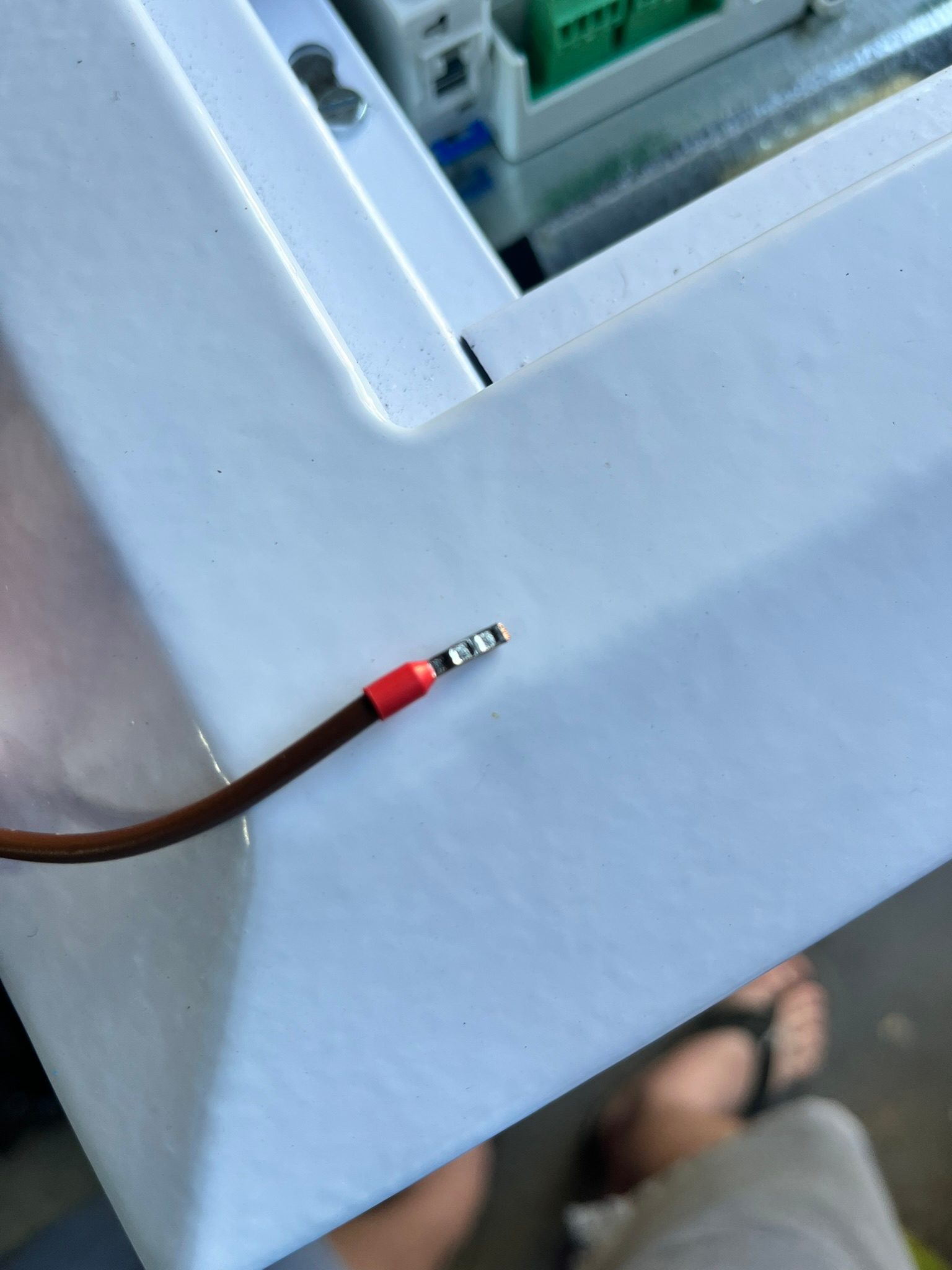
But on real sites, DG Technologies has often found that the fault sits much lower down the chain: a poor RJ45 termination, incorrect pair order, damaged cable, bad crimp, loose plug, untested patch lead or cable route that was never properly verified.
That is frustrating, because a premium access point can only perform as well as the cable feeding it.
If the cable is unreliable, the Wi-Fi will look unreliable.
A good access point still needs a good cable
Professional Wi-Fi is not magic.
A UniFi access point, or any proper ceiling access point, depends on clean network cabling and stable PoE power. That cable carries the data connection and often powers the device at the same time.
If the cable is badly terminated, the access point may still light up. It may even appear online. But the connection can behave strangely: random dropouts, speed negotiation problems, intermittent packet loss, reduced throughput, strange roaming behaviour or devices that seem to connect but perform badly.
That is why a network cable should never be treated as “just a cable”.
It is part of the system.
Pair order matters
An RJ45 connector is small, but the detail matters.
The conductor pairs must be in the correct order and terminated properly. The twist should be preserved as far as practical. The cable jacket should be handled neatly. The crimp should be solid. The connector should suit the cable. The cable should be tested after termination, not simply plugged in and assumed correct.
When the pairs are wrong, the problem may not always be obvious immediately.
Some devices negotiate down. Some behave intermittently. Some fail only when traffic increases. Some seem fine until PoE load or cable length exposes the weakness.
That is why DG Technologies would rather test and correct terminations properly than keep chasing symptoms at the Wi-Fi level.
Hidden access points make termination quality even more important
Many South African homes are built with concrete and brick walls, so hiding a Wi-Fi access point above a ceiling, near a speaker opening or inside a cupboard can be perfectly practical if the placement is sensible and service access is retained.
But hidden equipment raises the standard for cabling.
If the access point is above a ceiling and the RJ45 plug is poor, every future service call becomes more irritating. Someone has to open the access point location, reach the cable, test the termination and possibly remake the end. If the cable was left too short, the repair becomes even harder.
This is why DG Technologies cares about loops, service length and access.
The hidden installation must still be maintainable.
Testing saves arguments later
Network faults can create finger-pointing.
The internet provider says their router is working. The homeowner says the Wi-Fi is dropping. The electrician says the cable was pulled. The installer says the access point is online. The client does not care who is right. They want stable internet.
Proper testing removes a lot of that noise.
At minimum, the cable should be checked for continuity and pair correctness. On more serious projects, the network should also be validated in real use: PoE stability, switch negotiation, access point adoption, roaming behaviour, throughput and coverage.
That is the difference between installing an access point and commissioning a network.
Small workmanship creates large experience
Clients do not see the RJ45 plug behind an access point.
They see the result.
If the Wi-Fi works, nobody thinks about the cable. If it drops during a video call, music stream, CCTV review or smart-home command, the whole system feels poor.
That is why DG Technologies treats network terminations as part of the user experience.
A clean crimp is not just neat workmanship.
It is reliability.
The best Wi-Fi systems are built from a chain of small correct decisions: access point placement, cable quality, termination, switching, VLAN design, router management, PoE budget and final testing.
Miss the small things, and the big system suffers.