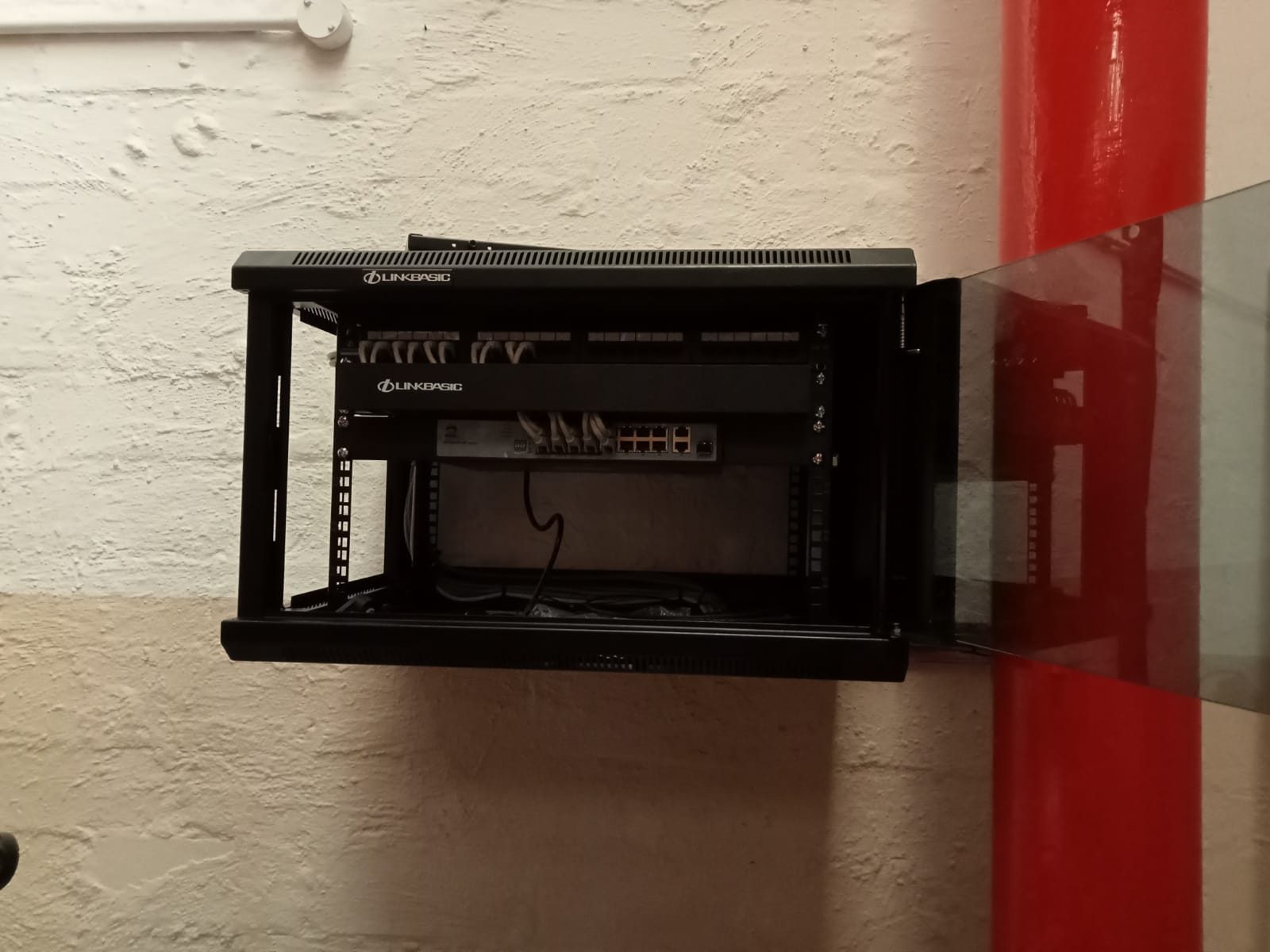
An equipment rack is not just a cupboard.
It may hold the network, CCTV recorder, automation processor, audio equipment, access control hardware, power protection, fibre equipment and remote support devices. If the wrong person unplugs the wrong cable, the whole property can be affected.
Rack access should be controlled.
Open access creates accidental faults
Many faults begin with good intentions.
Someone tries to restart the internet. Someone moves a plug to use a socket. Someone disconnects a cable to tidy the cabinet. Someone installs a new router without understanding what depends on the old one.
The result can be cameras offline, touch panels disconnected, audio missing, Wi-Fi down or remote access broken.
Controlled access reduces that risk.
Keys should have ownership
If a rack or cabinet has a key, somebody should know where that key is and who is allowed to use it.
In homes, this may be the owner or house manager. In businesses, it may be the facilities manager or authorised IT contact. The important point is that the key is not treated as a random spare.
If everybody can open the rack, nobody really owns the responsibility.
Labels do not replace access control
Good labelling helps, but it does not make every action safe.
A labelled patch panel may still be damaged by someone moving cables casually. A labelled power supply may still be switched off by mistake. A cabinet diagram may still be ignored during a rushed repair.
Labels and controlled access should work together.
Emergency access should be planned
There are times when a cabinet needs to be opened quickly.
That does not mean the rack should be permanently unlocked. It means the support procedure should explain who can authorise access during an emergency and how the technician can reach the equipment.
Security and supportability need to be balanced.
DG Technologies’ view
DG Technologies prefers rack access to be controlled, documented and understood.
The equipment rack is often the heart of the system.
It should not be treated like general storage.