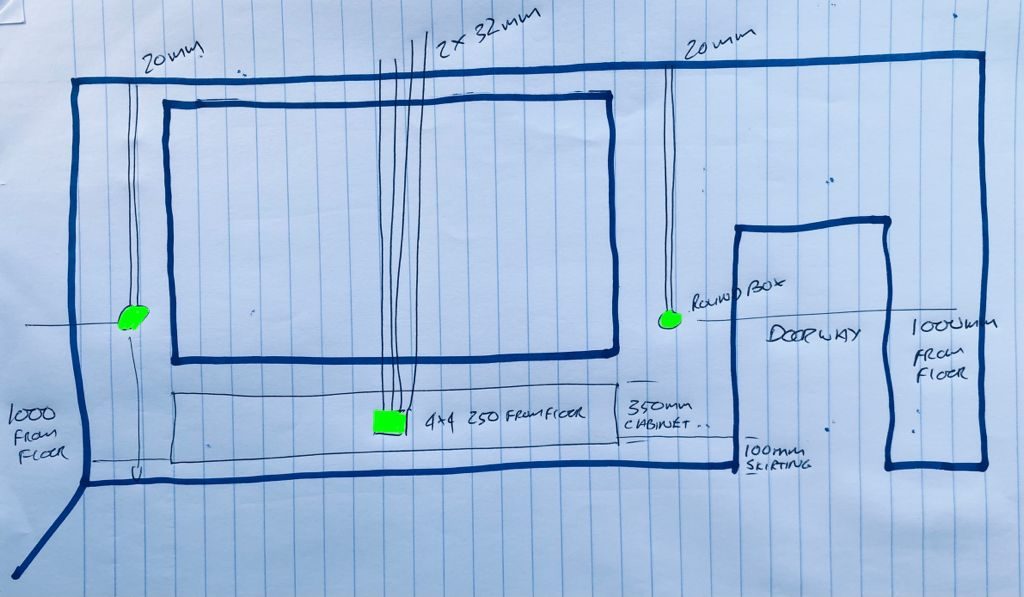
There is a big difference between installing technology into a house that was prepared for it and adding technology after the route was forgotten.
The equipment might be the same.
The work is not.
A TV point with the correct conduit to the head end is a clean installation. A TV point with no route becomes a retrofit problem. The team now has to find another path through ceilings, cupboards, walls, bulkheads, roof spaces or finished joinery.
That is why missing conduit changes the nature of the job.
The route is part of the product
Clients often see the device.
They see the TV, camera, speaker, access point, keypad or touch panel.
What they do not see is the route that allows that device to work properly without visible cabling.
The route is not a background detail. It is part of the system.
If the route is missing, the installation becomes slower, more invasive and more dependent on what the finished building will allow.
Retrofit work carries finish risk
In a completed home, every correction touches something expensive.
Ceilings may be painted. Walls may be tiled. Joinery may be complete. Stone may be installed. Wallpaper may be up. Feature lighting may already be commissioned.
Once that happens, the AV installer is no longer simply pulling cable.
He is working around finished work that must not be damaged.
That care takes time.
Missing conduit can limit the result
Sometimes a workaround is possible.
Sometimes it is only partly possible.
A camera may need to move to a less ideal position. A Wi-Fi access point may need to sit where access exists rather than where coverage is best. A TV cable may need a visible route. A speaker position may be adjusted around structure instead of sound.
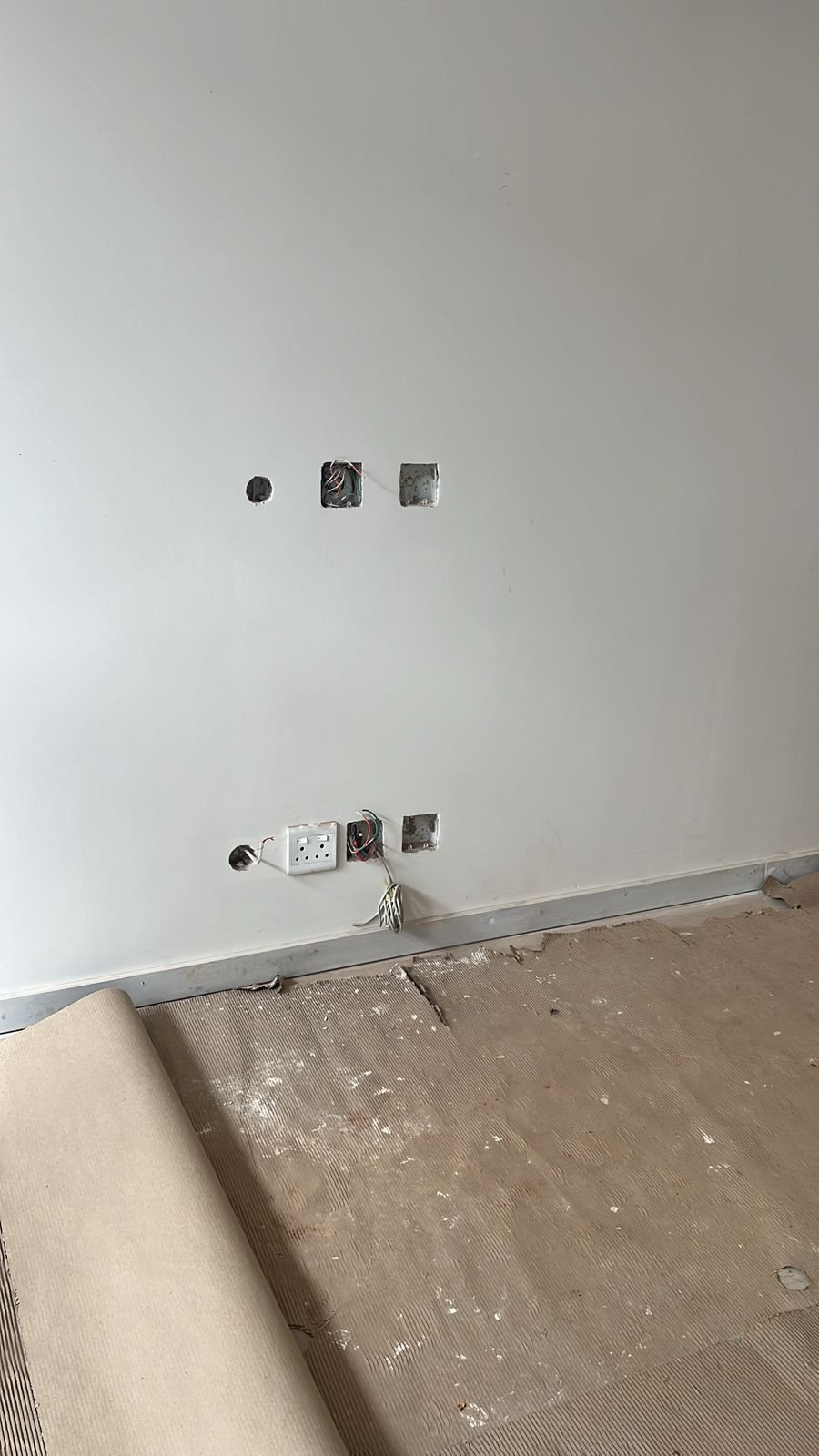
Retrofit work often starts with questions that should have been answered during first fix: where does the cable exit, where does the equipment sit, and how will the finished wall remain clean?
The client still gets a working system, but the original clean design has been compromised.
Draw wire and access matter too
A conduit that cannot be used is almost the same as no conduit.
If the pipe is too small, blocked, over-bent, inaccessible or missing draw wire, the cable pull may fail. If there are no accessible draw boxes, future replacement becomes harder.
Good conduit planning is not only about putting a pipe in a wall.
It is about making sure the route can actually be used.
The cheapest time to fix conduit is before finishes
Before plastering and ceiling closure, conduit mistakes are annoying.
After finishes, they become expensive.
That is why DG Technologies pushes for early low-voltage review on serious projects. It is not to complicate the build. It is to prevent a clean installation from becoming a retrofit before the family has even moved in.
The best AV work is often decided long before the equipment arrives.