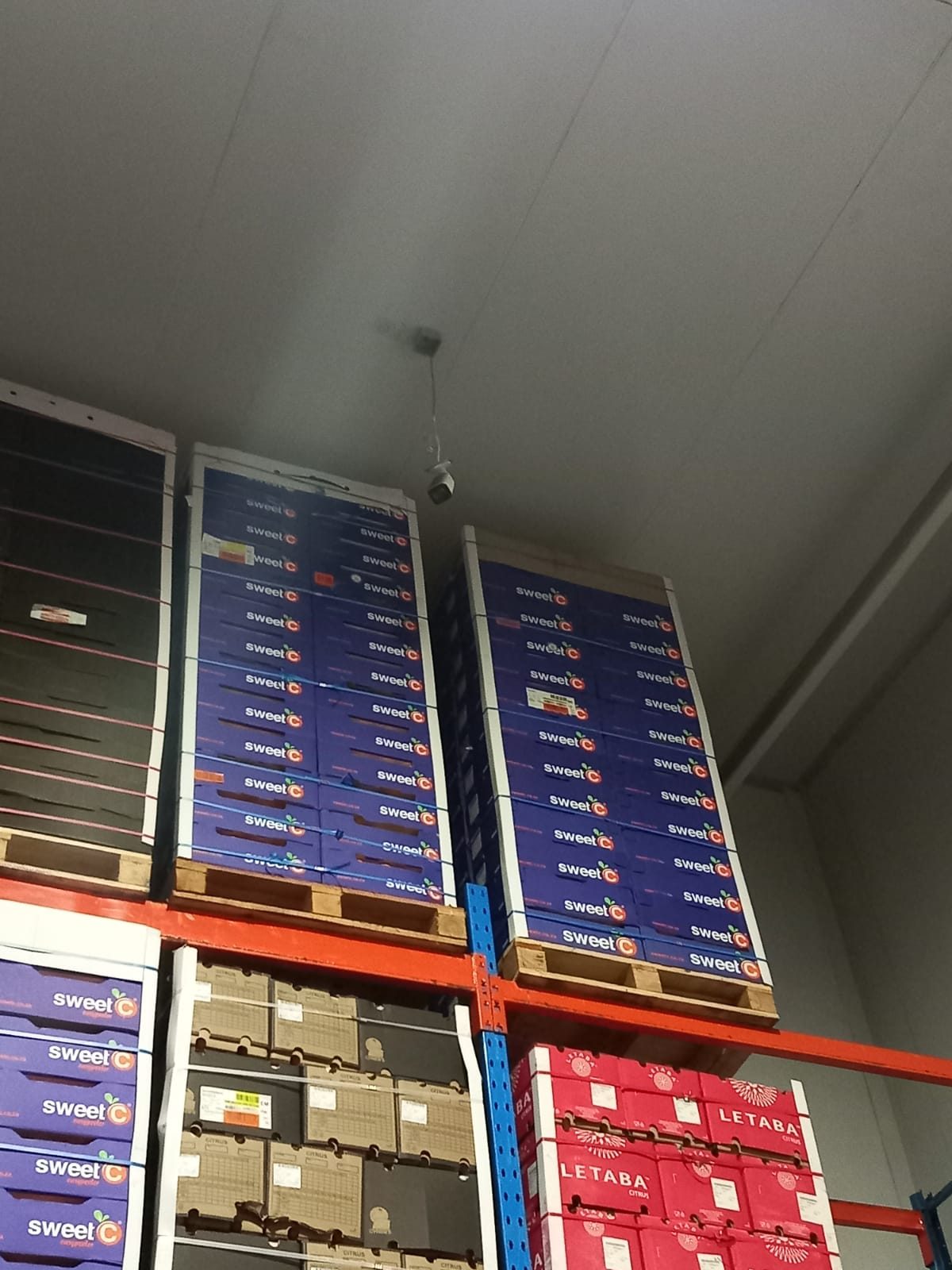
Forklifts change the CCTV design.
They affect where cameras can be mounted, where cables can run, where conduit needs protection and where equipment may be exposed to impact.
In a warehouse, camera placement is not only about the view.
It is also about survival.
Movement paths matter
Forklifts, pallet jacks, trucks and trolleys follow practical routes through the site.
Those routes may pass close to columns, doors, loading bays, racking, battery areas and dispatch counters. A camera or cable route that looks safe on a quiet site may be vulnerable during normal operation.
The design should account for real movement.
Cable protection is part of the camera system
A camera can be a good product and still fail because its cable route was poorly protected.
Exposed conduit, low junction boxes, unprotected surface runs and badly placed power supplies can be damaged by impact, stock movement or cleaning.
Industrial CCTV should think about the camera, the cable and the environment as one system.
High mounting is not always the answer
Mounting higher can protect the camera from impact, but it may reduce identification quality.
The site may need a mix of high overview cameras and lower purpose-specific cameras at doors, handover points, entrances or dispatch counters. Those lower cameras may need stronger physical protection and better planning.
The supervisor knows the traffic
The operations team often knows which routes are risky.
They know where forklifts turn, where drivers cut corners, where pallets are stacked temporarily and which doors stay busy. Their input can prevent camera positions that look good on a drawing but fail in use.
DG Technologies designs around the operating site
Warehouse CCTV should be designed around what happens there every day.
That means vehicles, people, stock, weather, cleaning, cable protection and support access all matter.
The view is only one part of the installation.