Coastal homes are beautiful places to live and difficult places for technology to survive.
Along the KZN coast, AV equipment, CCTV cameras, network points, speaker connections, brackets, outdoor cabinets and cable terminations work in a harsher environment than they would inland.
Salt air, humidity, wind, heat, insects, water ingress and building movement all play a part.
That changes the design.
The cable choice is not only about speed
When people compare data cable, they often ask about speed.
Cat5e, Cat6, Cat6A, fibre.
Those things matter, but in coastal homes the physical construction of the cable also matters. Where the cable is installed, how it is protected, what jacket it has, how it is terminated and how exposed it is can decide how long it lasts.
A cable that performs well indoors may not be appropriate in an outdoor run, a damp service route or a roof space that becomes hot and humid.
The cheapest cable is not always the cheapest decision.
Corrosion starts at the small points
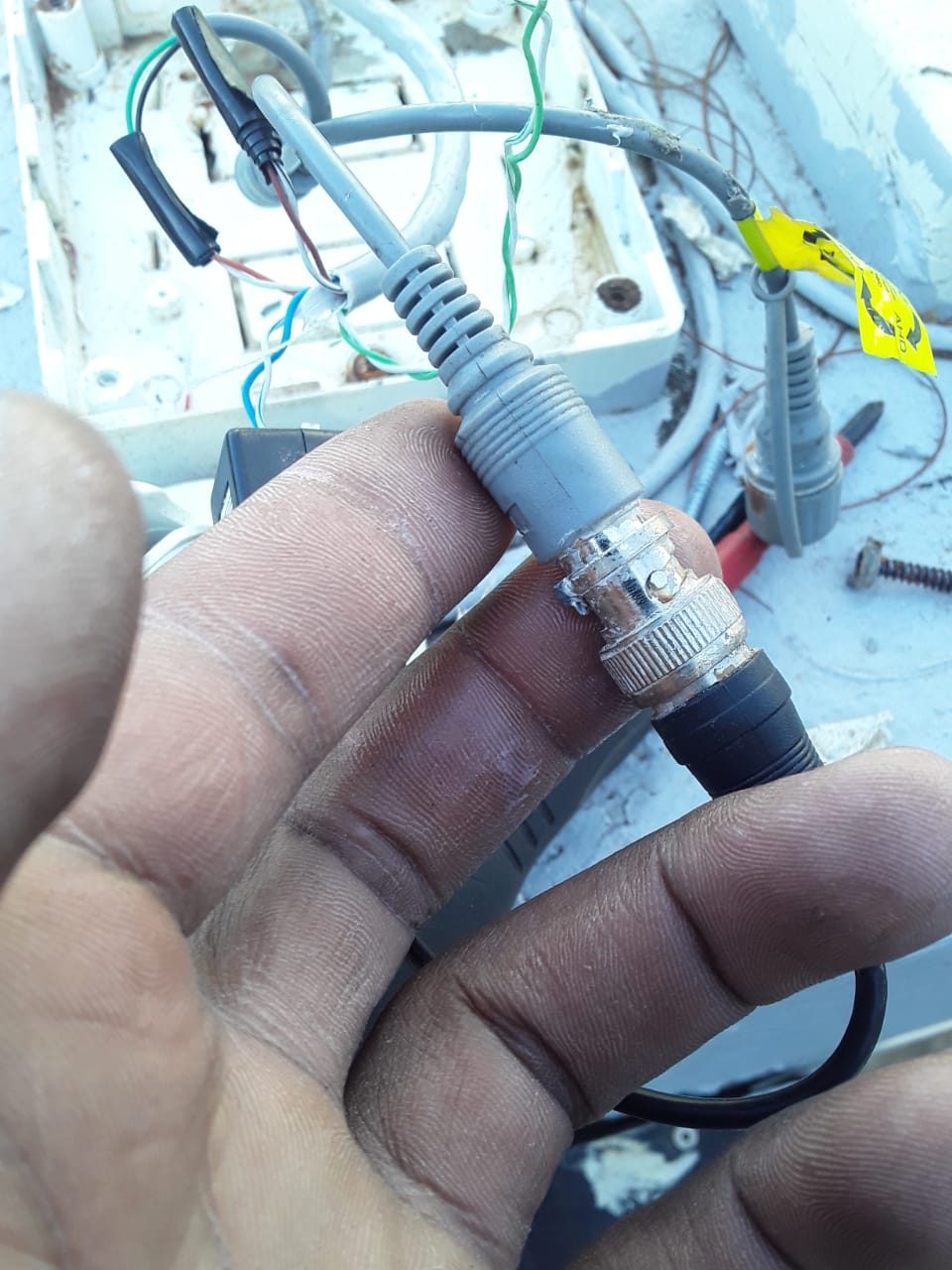
Many coastal failures begin at small metal contact points:
- RJ45 connectors,
- camera pigtails,
- speaker terminals,
- power connections,
- brackets,
- screws,
- plugs,
- wall plates,
- patch panels,
- and outdoor joins.
The system may not fail immediately.
It may become intermittent first.
A camera drops offline after rain. A speaker crackles. A network point tests fine one day and fails the next. A bracket begins to stain. A connector looks slightly dull, then becomes unreliable.
That is why weatherproofing and termination quality matter so much.
Outdoor equipment needs a service plan
Outdoor CCTV, outdoor audio, gate intercoms, access control and Wi-Fi access points should be designed with maintenance in mind.
If a camera is installed where nobody can safely reach it, cleaning and servicing become expensive. If an outdoor speaker is mounted without thinking about sun, spray, drainage or cable entry, the installation may look good briefly and then become a problem.
The question is not only, “Will this work today?”
It is also, “Can we get back to it when the coast has done what the coast does?”
Some savings are sensible and some are false economy
I do not believe every coastal home needs the most expensive version of every product.
There are places where a sensible cost saving is perfectly acceptable.
But I am careful when the saving affects exposed cabling, outdoor terminations, waterproofing, surge protection, cabinet ventilation, power protection or service access.
Those are not decorative details.
They are the things that keep the system alive.
Equipment location matters
Putting AV or network equipment into a damp cupboard, hot ceiling space or unventilated joinery is risky anywhere. On the coast, that risk increases.
Equipment should be placed where it can breathe, where it can be inspected, where salt and moisture exposure are reduced and where the client does not have to unpack half a cupboard for a technician to access it.
This applies to:
- routers,
- switches,
- PoE injectors,
- CCTV recorders,
- amplifiers,
- HDMI extenders,
- power supplies,
- and control processors.
If the location is wrong, the product choice may not save the system.
Coastal homes need better documentation
When a fault appears years later, the technician needs to know where the cable runs, where joints were made, what is outdoors, what is in conduit, what is in a roof space and what has already been replaced.
Documentation is not paperwork for paperwork’s sake.
It shortens future diagnosis.
In coastal environments, where corrosion and weather can slowly create faults, knowing the route and termination history is extremely useful.
Design for the place, not only the product
A coastal AV or CCTV installation should not be designed as if it lives in a dry showroom.
The system lives in a real house, with real humidity, real salt air, real builders, real cleaners, real weather and real maintenance limits.
That is why the small choices matter:
- the right cable,
- the right route,
- the right enclosure,
- the right termination,
- the right bracket,
- the right power protection,
- and the right service access.
Those details are easy to miss in a quote.
They are much harder to ignore after the first coastal failure.
Related reading: CCTV and security planning and premium Wi-Fi and networking.