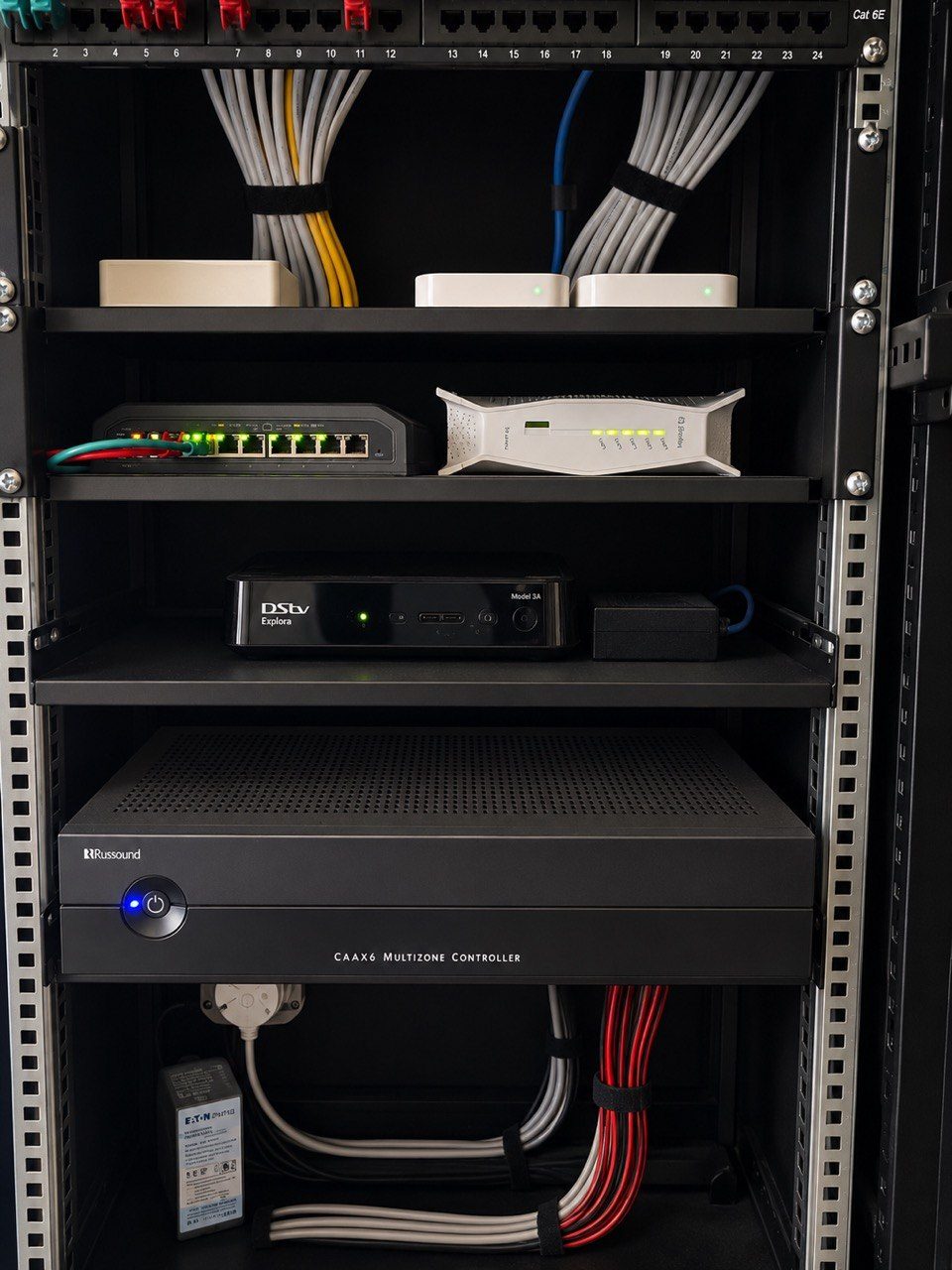
A home extension changes the technology map.
New bedrooms, patios, cottages, gyms, offices, garages, staff areas or entertainment spaces may all need Wi-Fi, audio, TV, cameras, lighting control or access integration.
Before that work starts, the existing rack location should be reviewed.
The old head end may not suit the new home
The rack may have been placed correctly for the original building.
After an extension, it may no longer be central. Cable routes may become too long. Outdoor areas may need new paths. Cameras may require different switching. Wi-Fi access points may need new fibre or copper routes.
The rack may still work, but it should not be assumed.
Distance and route matter
Low-voltage systems are physical.
Cables have distance limits. Conduits have bends. Fibre routes need planning. TV points, access points, cameras and speakers need practical paths back to the head end or local cabinet.
If the extension is planned without reviewing routes, the AV team may be forced into awkward solutions later.
The rack may need capacity
An extension can add more than a few cables.
It may require extra switch ports, PoE budget, patch-panel space, UPS capacity, amplifier channels, processor capacity, ventilation and cabinet depth.
A rack that was tidy before the extension can become overloaded if capacity is not reviewed.
Sometimes a local cabinet is better
Not every extension should force every cable back to the original rack.
In larger properties, a secondary cabinet, fibre link or structured network point may make more sense. The decision depends on distance, system design, access, power, cooling and support requirements.
This is why large KZN homes need a network backbone, not just Wi-Fi.
DG Technologies reviews the future shape of the property
A rack decision is not only about where equipment fits today.
It is about how the property will be serviced, expanded and understood later.
Before extending the house, review whether the head end still makes sense.