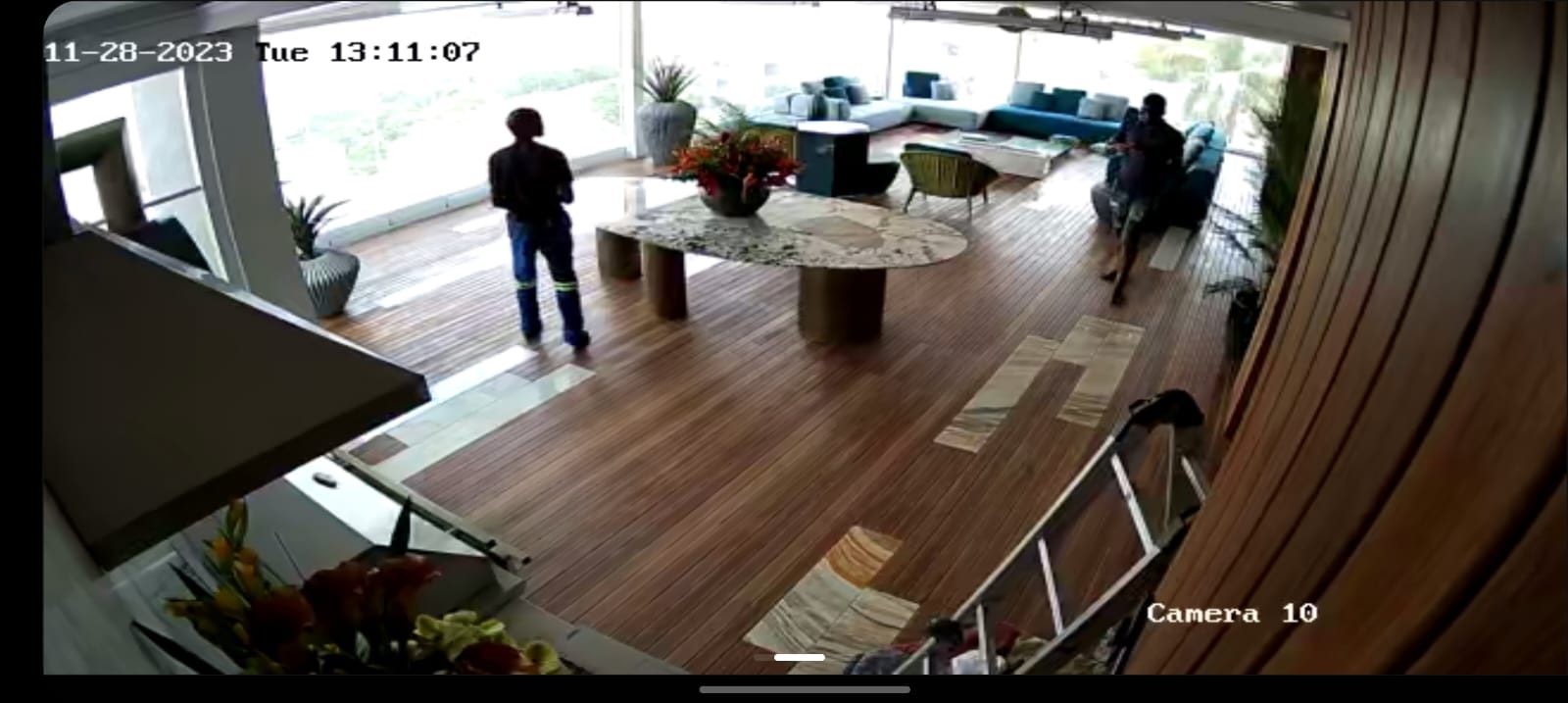
When homeowners ask for CCTV, the first question is often, “How many cameras do we need?”
It is an understandable question. Camera count feels measurable. Four cameras sounds smaller than eight. Sixteen sounds more serious than eight. A quotation with more cameras can look more complete.
But CCTV for an estate home should not be designed from a camera count. It should be designed as a security system.
That difference matters in places like Mount Edgecombe Estate, Zimbali Estate, Simbithi, Umhlanga and Ballito, where homes often have long driveways, layered entrances, boundary walls, staff access routes, garages, entertainment areas, garden levels and estate rules around how contractors may work. The property may already sit inside a managed estate, but the home still needs its own security design.
Good CCTV is not about seeing everything at once. It is about seeing the right things clearly enough, at the right moment, from a system that records reliably and is still usable months later.
At DG Technologies, we approach CCTV and security as part of the wider home infrastructure. Cameras are only the visible part of the system. The design behind them is what decides whether the footage is useful.
Camera count is a poor starting point
A camera count does not tell you what the system will prove.
Eight poorly placed cameras can still miss the face at the pedestrian gate, the vehicle at the driveway, the person moving through the side passage, or the handover at the service entrance. Four well-planned cameras can sometimes give better evidence than twelve wide-angle cameras pointing at general areas.
The right starting point is not quantity. It is intent.
For each camera, we want to know:
- What must this camera identify?
- Is it for awareness, verification or evidence?
- What distance is the subject from the lens?
- Will the camera see a face, a vehicle, a gate event or only movement?
- What happens at night?
- Is the view affected by glare, headlights, downlights or garden lighting?
- Can the cable route be installed cleanly and serviced later?
- Does the camera respect estate rules and neighbouring privacy?
Those questions quickly change the design. A camera that simply shows the front garden has a different job from a camera that must identify a person at a pedestrian gate. A camera watching a long driveway needs different thinking from one watching a courtyard. A camera under an eave may look neat, but if it is too high and angled too steeply, it may record the top of a cap instead of a face.
This is why we have written separately about what proper CCTV design considers before installation. The planning is not admin. It is the work that makes the system valuable.
Perimeter design comes before camera positions
For estate homes, we normally start by understanding the perimeter.
The perimeter is not only the boundary wall or fence. It includes the places where someone can approach the house, hide from view, move between levels, enter a service yard, reach a garage, or get from the road to the front door. In KZN estate homes, this can be less obvious than it looks on a plan. Landscaping, slopes, golf course edges, coastal vegetation, retaining walls and outdoor entertainment areas can all create blind spots.
A sensible CCTV design looks at the perimeter in layers:
- the public or estate road edge
- the driveway and vehicle gate
- the pedestrian gate and intercom point
- side passages and service routes
- garage doors and parking areas
- boundary walls, garden edges and low-visibility zones
- patios, pool areas and outdoor living spaces
- staff entrances, courtyards and delivery points
The aim is not to put a camera on every corner. The aim is to understand likely movement routes and design views around them.
If somebody enters the property, where will they probably pass? If a vehicle comes in, where does it slow down? If a delivery or contractor arrives, where does the interaction happen? If an alarm is triggered at night, which cameras help you confirm whether there is a real issue?
Those answers produce a system. A camera count does not.
Choke points matter more than broad views
Choke points are the places where movement narrows and becomes predictable.
On an estate home, common choke points include a driveway gate, pedestrian gate, front door, garage entrance, side passage, staff entrance, bridge, stair, corridor between buildings, or path between the boundary and the house. These are often better camera positions than broad open areas because people and vehicles naturally pass through them.
A wide camera looking over a lawn may help with awareness. It can show that movement happened. But if the person is small in the frame, the footage may not help much afterwards.
A camera aimed carefully at a choke point can do more useful work. It can capture a face as somebody turns toward a gate. It can record a vehicle as it slows down. It can show whether a person entered through a specific route or only passed near it.
This is where a professional design often differs from a quick camera installation. The quick approach says, “This corner gives us a nice wide view.” The design approach asks, “Will this view answer the question after an incident?”
Driveway and gate views need special attention
Driveways and gates are some of the most important views in an estate CCTV system, but they are also easy to get wrong.
The homeowner may want to see who is arriving. The estate may already have perimeter security. The intercom may show a visitor. But the house system still needs its own useful record of vehicles, gate activity and people approaching the entrance.
For driveway and gate views, a camera should be planned around distance, angle and timing. A vehicle at the gate may be moving slowly, but headlights, reflections, shadows and gate motors can all affect the image. A camera mounted too high may see the roof of the vehicle instead of the driver area. A camera angled too wide may make number plates or faces too small to use.
It is also important to separate awareness from identification.
One camera may provide a broad driveway view so the homeowner can see what is happening. Another may provide a tighter identification view at the gate or vehicle choke point. Trying to make one wide camera do both jobs can leave the system weak at the exact point where detail matters.
Where access control is part of the property, CCTV should support it. Gate release events, intercom calls, keypad use, biometric access, staff access and delivery activity should be visible in a way that makes sense later. The question is not only “Can I open the gate from my phone?” It is also “Can I review what happened at the gate afterwards?”
Facial and vehicle identification are design outcomes
There is a big difference between seeing a person and identifying a person.
Facial identification needs the face to occupy enough of the image, with a usable angle and acceptable lighting. If the camera is mounted too high, too far away, too wide or pointed into harsh backlight, the image may show activity but not identity.
Vehicle identification has its own challenges. A normal overview camera may not reliably capture number plates, especially at night, in rain, with headlights facing the lens, or where the vehicle moves through the frame at an angle. In some cases, a dedicated vehicle identification view is needed. In other cases, the best practical result is a clear vehicle make, model, colour and direction of travel rather than a guaranteed plate read.
This is where honest engineering judgement matters. Not every residential camera position can do every job. A good design should explain what each camera is expected to achieve and where the limitations are.
If a quote promises perfect identification from every wide-angle camera, that should raise questions. Useful CCTV comes from matching the camera, lens, mounting position, lighting and recording settings to the job.
Camera height and angle decide the usefulness of footage
Estate homes often have beautiful architecture: high eaves, large entrance volumes, recessed garages, stonework, timber ceilings, long roof overhangs and carefully finished exterior walls. It is tempting to mount cameras high, out of reach and out of sight.
High mounting can be useful for overview. It can protect the camera and reduce visual clutter. But for identification, high is often the wrong answer.
A camera mounted very high and angled down may show the top of a head, the top of a vehicle, or the movement path without the detail needed. A camera mounted lower and aimed across the subject’s path can often capture a more useful face or vehicle view.
That does not mean cameras should be placed awkwardly or carelessly. The installation still needs to look clean and suit the property. But height and angle should be chosen for the job, not just for convenience.
Before drilling, the installer should understand what the final image must show. This is especially important where cameras are fitted to finished homes, newly painted walls, cladded columns or coastal exterior surfaces where rework is costly and untidy.
Lighting is part of the CCTV system
CCTV performance changes at night.
Many cameras have infrared night vision, but infrared is not a magic fix. It can reflect off walls, glass, pillars, gates, plants and nearby surfaces. It may help in one direction and create a poor image in another. Colour-at-night cameras can perform well, but they still need enough usable light.
Estate homes often have decorative lighting, landscape lighting, driveway lights and architectural lighting. These can help CCTV if planned properly. They can also create glare, dark contrast, reflections or blown-out faces if ignored.
Good CCTV planning considers:
- where light already exists
- whether faces are lit from the front or behind
- how headlights affect driveway cameras
- whether garden lighting creates bright foreground and dark background
- whether reflective walls or glass will interfere with night views
- whether discreet additional lighting is needed at key choke points
Lighting does not need to make the house look like a car park. It needs to support the security outcome without compromising the property.
Storage and retention should match the risk
The recorder is not just a box in a cupboard. It decides how long footage is kept, how easily it can be reviewed, and whether the system can keep recording when multiple cameras are running at useful quality.
Storage planning should consider camera count, resolution, frame rate, compression, recording method, motion settings and the homeowner’s retention requirement. A system that records for only a few days may not be enough if an event is discovered late. A system that records too aggressively without enough storage may overwrite important footage before anyone checks it.
For many estate homes, the practical question is: how long do you need to go back? A weekend away, a holiday period, staff or contractor activity, deliveries, gate events and alarm triggers may all require review after the fact.
Storage should also be installed in a sensible location. The NVR or recording equipment should have stable power, ventilation, clean cabling, UPS consideration and reasonable physical security. It should not be left loose in a hot cupboard with poor airflow and no labelling.
Remote viewing depends on the network
Most homeowners expect to view cameras from a phone. That expectation is reasonable, but remote viewing depends on more than the camera brand.
The home network must be stable. The recorder must be connected properly. The internet connection must be reliable enough. The app must be configured cleanly. The rack should be labelled and serviceable. If alerts are required, they should be tuned so they are useful, not ignored after a week.
Modern CCTV is usually an IP system, which means it sits on the network. In larger homes, that network may also support Wi-Fi, smart home control, streaming, lighting processors, access control, intercoms, work-from-home traffic and guest devices. If the network infrastructure is weak, CCTV will feel weak even if the cameras are good.
We often see CCTV problems that are really network problems: underpowered switches, poor PoE budgeting, bad terminations, overloaded routers, weak internet failover, messy racks, or cameras added over time without a proper structure.
For estate homes, the CCTV network should be treated as infrastructure, not an afterthought.
Privacy and estate rules are part of the brief
CCTV must protect the homeowner without creating unnecessary privacy problems.
Estate properties sit close to neighbours, roads, golf course edges, shared servitudes, communal areas and staff routes. A camera should not casually look into a neighbour’s private space because it was easier to mount it that way. Views should be aimed and masked responsibly where required.
There are also practical contractor rules. Many estates have access procedures, working hours, noise controls, parking rules, induction requirements, insurance requirements, conduct rules and restrictions around exposed cabling or visible equipment. In some cases, exterior work may need approval or coordination with the estate management team.
That affects the design and the installation programme. If a camera needs a conduit route, high-level access, trenching, ceiling work, drilling through finished walls, or work near a shared boundary, it should be planned before the team arrives with tools.
Good contractors understand that estate work is not only technical. It has to be clean, coordinated and respectful of the home, the estate and the people living around it.
Estate areas have different site conditions
Mount Edgecombe, Zimbali, Simbithi, Umhlanga and Ballito are often mentioned together, but the site conditions are not identical.
In Mount Edgecombe, homes may have golf-estate layouts, long road-facing edges, established landscaping, garages set back from the road, and strong expectations around neat installation. In Zimbali and Ballito, coastal exposure, humidity and salt air can influence camera housings, brackets, cable routes and maintenance planning. Simbithi homes often work with terrain, vegetation, split levels and natural outlooks, which can make camera views less obvious from a flat plan. Umhlanga properties may have compact, high-value sites where privacy, access and driveway visibility all need careful handling.
The right CCTV design responds to the actual property. It should not be a standard kit copied from another home.
For homeowners planning or upgrading CCTV in these areas, our earlier guide on CCTV planning for estate homes in KZN covers some of the core design questions. The main point is the same: the system should be designed around the home, not around a bundle.
What a proper estate CCTV plan should answer
Before installation starts, the homeowner should be able to understand the logic of the system.
A proper plan should explain:
- which perimeter areas are covered
- which choke points are being prioritised
- which cameras are for awareness and which are for identification
- how gate, driveway and pedestrian views will work
- what can realistically be identified at night
- where cameras will be mounted and why
- how lighting affects each important view
- where the recorder will be installed
- how long footage is expected to be retained
- how remote viewing will be configured
- how the CCTV system connects to the network
- how privacy and neighbouring views will be handled
- what estate contractor rules may affect the work
- where future expansion has been allowed for
That list is more useful than a camera count because it tells you what the system is meant to do.
The DG Technologies approach
DG Technologies works with homeowners and project teams across Durban, Umhlanga, Ballito and the KZN North Coast. Our role is not to sell the most cameras. It is to design a system that gives the homeowner useful visibility, reliable recording and a clean installation that can be supported later.
Sometimes that means more cameras. Sometimes it means fewer cameras in better positions. Sometimes it means improving the network, changing the recorder location, adding proper conduit, adjusting lighting, or integrating CCTV with access control so gate activity is easier to review.
The judgement matters because security systems are tested after the installer has left. When something happens, the homeowner does not need a camera count. They need footage that answers the question.
If you are planning CCTV for an estate home in Mount Edgecombe, Zimbali, Simbithi, Umhlanga or Ballito, start with the system design. The equipment list should come after the thinking.