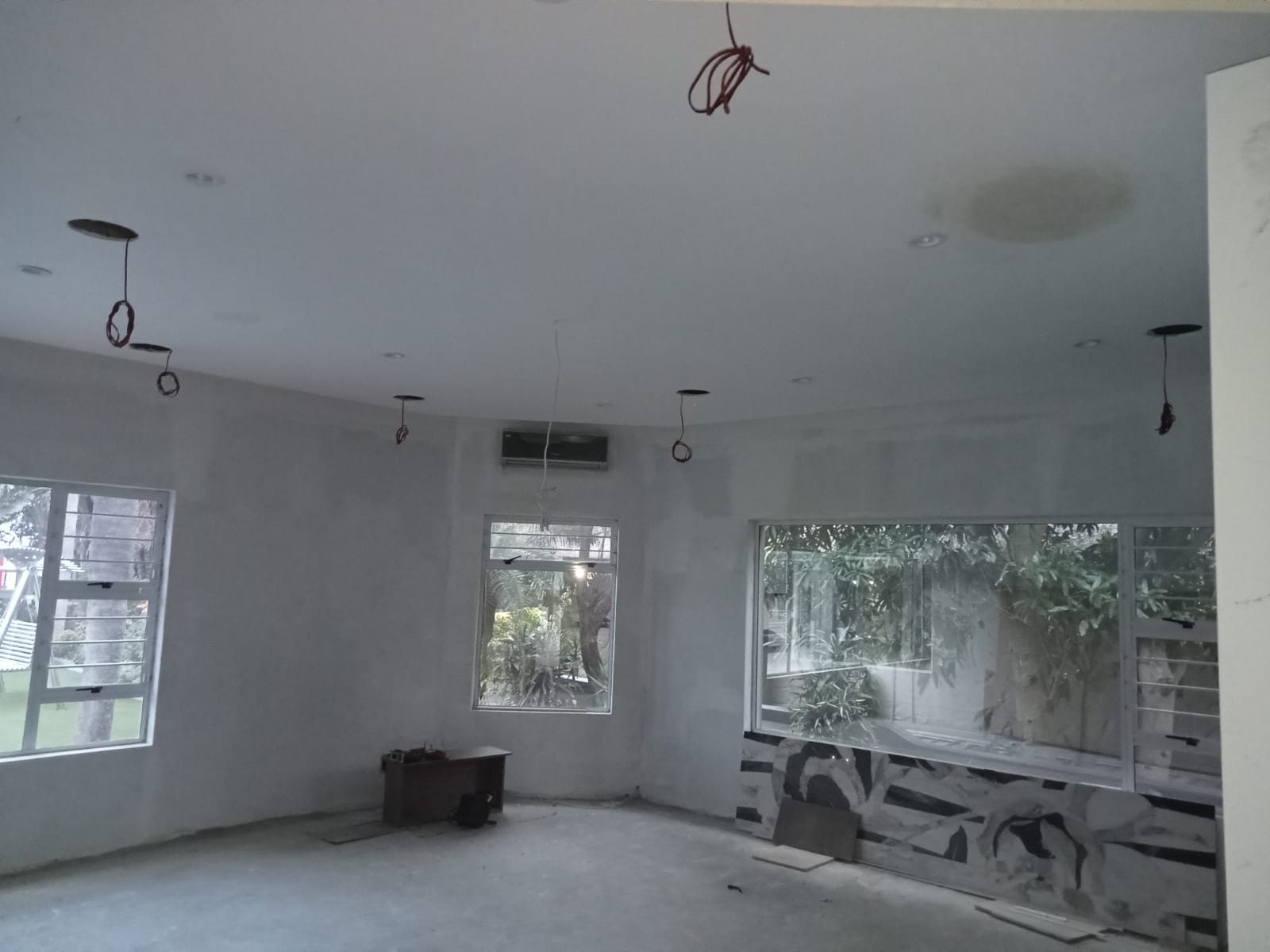
The equipment room is often treated as leftover space.
That is a problem.
The rack, network switches, amplifiers, processors, power equipment, patch panels and source devices may all live there. If the space is dark, cramped, hot or blocked, every future service call becomes harder.
Technicians need to see what they are doing
Rack work involves small labels, connectors, ports, LEDs, screws and cable paths.
Poor lighting makes simple work slower. It increases the chance of unplugging the wrong cable, misreading a label or missing a warning light. A torch is useful, but it should not be the main lighting strategy for a premium equipment area.
Good light is part of serviceability.
Working space matters
A rack needs space around it.
Technicians may need to remove equipment, access the rear, trace cables, test connections or replace devices. If the rack is buried behind stored items, squeezed into a cupboard or blocked by joinery, maintenance becomes unnecessarily difficult.
That difficulty eventually costs the client time.
Heat and access are connected
Cramped equipment spaces often run hotter.
Closed cupboards, poor ventilation and packed shelves can create heat problems for amplifiers, receivers, network switches and processors. The installer must be able to inspect and maintain the cooling path.
If nobody can reach the equipment properly, nobody can care for it properly.
The equipment area should not be storage
It is common for rack rooms to become storage areas after handover.
Boxes, cleaning supplies, luggage or building materials may end up around the cabinet. That can block airflow, cover cables or make urgent access difficult. The client should understand that the technology area is part of the home’s infrastructure.
Power points should be intentional
An equipment room should not depend on loose multiplugs and whatever socket happened to be nearby.
The rack may need dedicated power, UPS-backed circuits, service sockets and enough outlets for source devices, network hardware and test equipment. Poor power planning often creates messy cabling and makes maintenance harder.
The electrician and technology installer should agree on the power layout before the room is finished.
The door and cabinet design matter
Joinery can make or break the equipment space.
A beautiful cupboard is not useful if the doors block the rack, trap heat or make rear access impossible. Shelves, hinges, handles and removable panels should be considered before the cabinet is built.
The equipment area can still look neat.
It just needs to remain usable.
DG Technologies’ view
DG Technologies believes the equipment room should be designed like a serviceable technical space.
It does not need to be flashy.
It needs light, space, power, ventilation and respect.