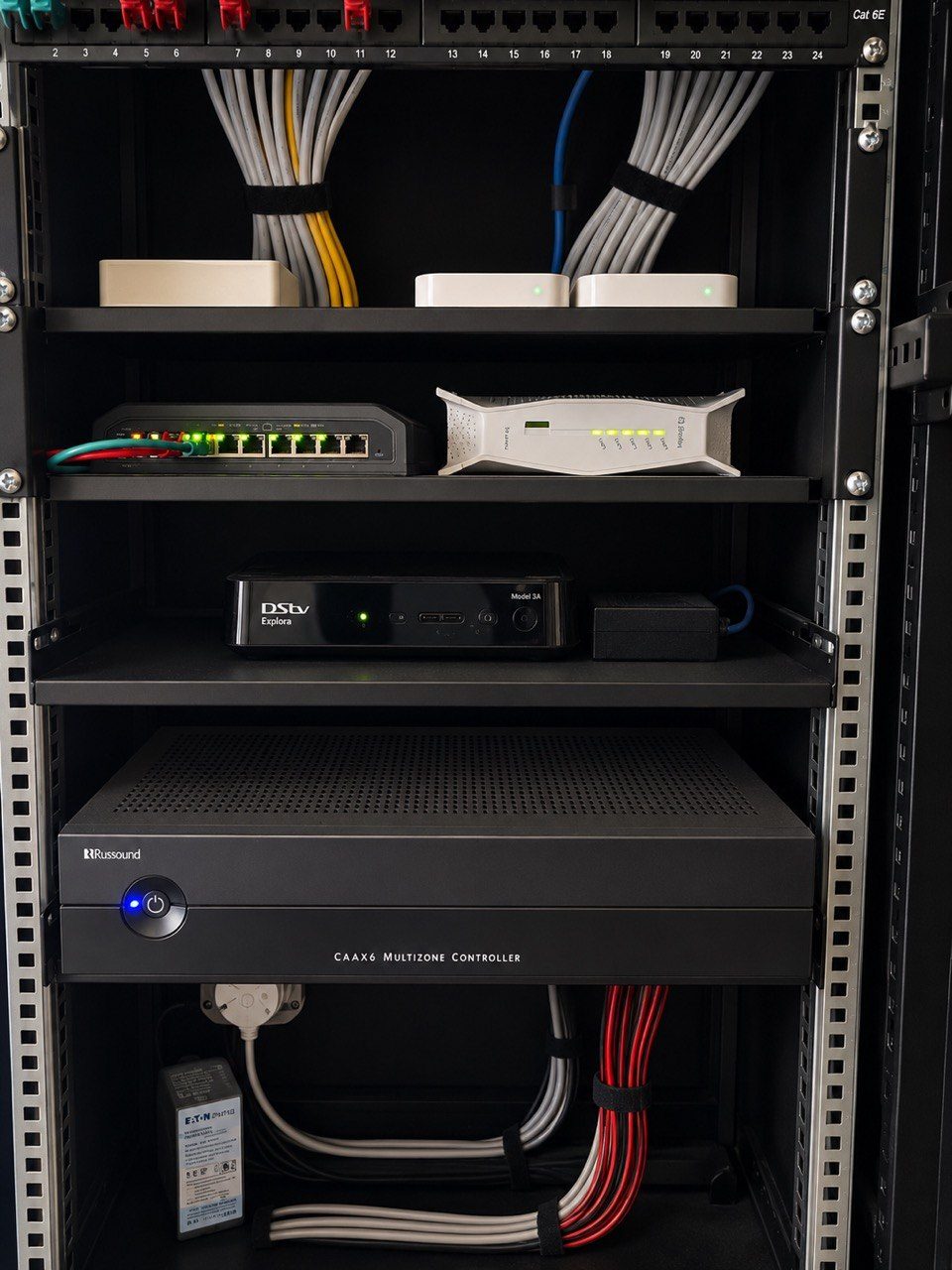
One of the smallest-looking decisions on a building project can change the whole low-voltage installation.
Cabinet depth.
On a drawing, a data cabinet may look like a simple rectangle on a wall. In practice, that cabinet has to accept conduit, cable bundles, patch panels, network switches, power supplies, fibre equipment, CCTV recorders, control processors and service loops. It also needs enough space for a technician to work without crushing cables or forcing equipment into a position it was never designed for.
That is why cabinet depth should be confirmed before pipework starts.
A cabinet is not only a box
A cabinet has to do several jobs at once.
It must hold equipment securely. It must allow cables to enter cleanly. It must give patch leads room to bend. It must allow the door to close. It must provide airflow. It must leave space for labels. It must allow future devices to be added without rebuilding the installation.
If the cabinet is too shallow, the problem does not always appear immediately.
The problem appears when the switch is installed, the patch leads are dressed, the power supplies are added and the door no longer closes properly.
At that point, the pipework may already be buried in walls.
Pipework depends on the cabinet
Conduit routes should not be designed in isolation.
The electrician or builder needs to know where the cabinet is, how deep it is, where the cable entry will be and how many conduits are entering. A cabinet that looks acceptable in plan view may be wrong once the cable entry, bend radius and equipment depth are considered.
This is especially important in premium homes where the cabinet may be hidden inside joinery, a garage cupboard, a utility room or a dedicated rack area.
The neater the architectural finish, the earlier the technical planning needs to happen.
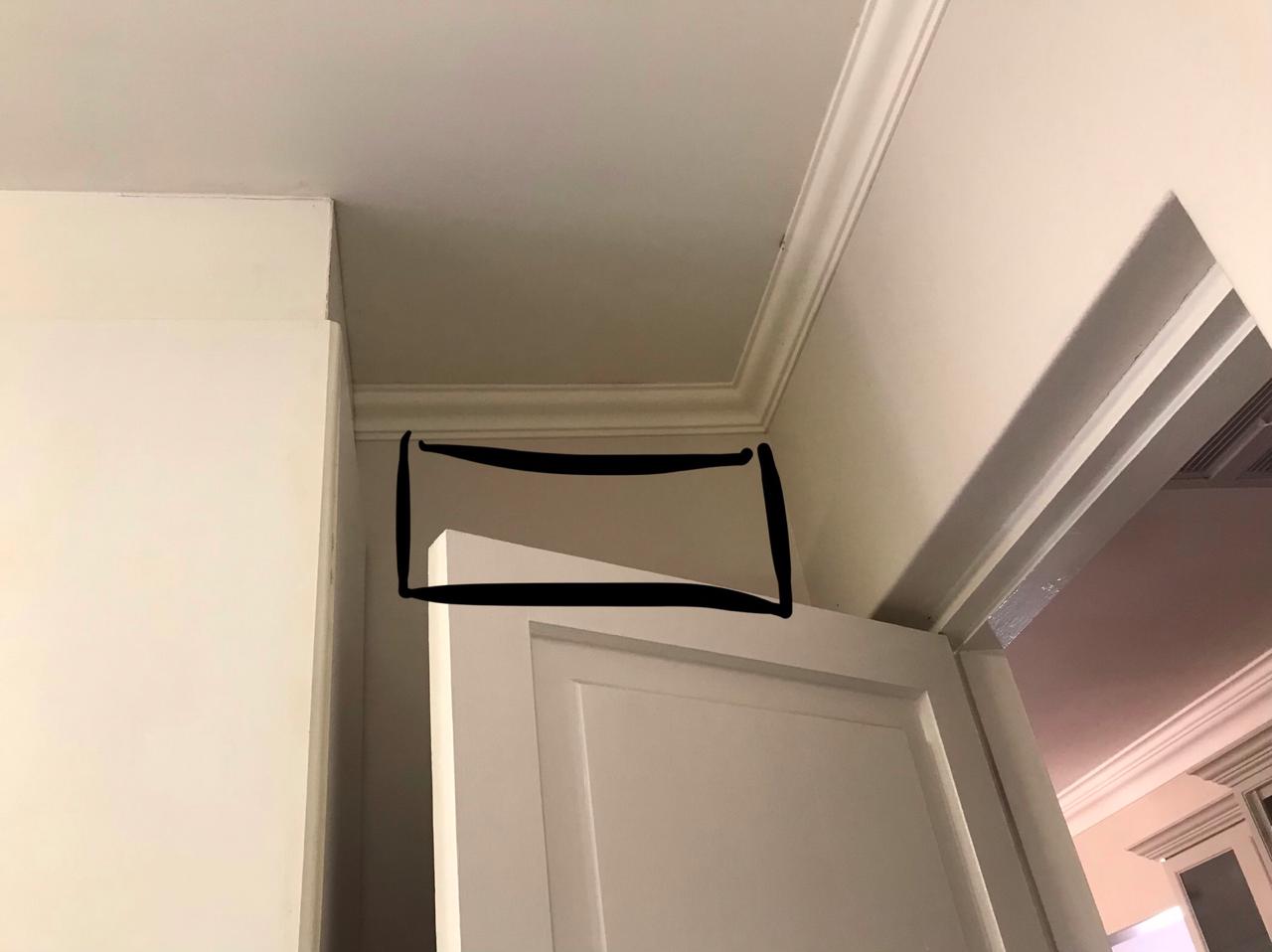
Cable bend radius is real
Data cable, fibre, HDMI extenders and speaker cable should not be forced through tight bends simply because the cabinet is shallow.
Bad cable entry creates stress.
That stress can cause difficult faults later:
- damaged terminations,
- intermittent camera dropouts,
- poor network performance,
- cracked fibre,
- HDMI handshake issues,
- patch leads pressing against cabinet doors,
- poor airflow around equipment.
These are not luxury problems. They are practical installation problems.
A deeper cabinet often costs less than a retrofit
It can feel expensive to specify a bigger cabinet early.
It is usually cheaper than fixing the wrong cabinet later.
Once pipework is installed, plastering is done, joinery is manufactured and the room is finished, changing cabinet depth becomes disruptive. A small saving on cabinet size can turn into labour, making good, repainting, joinery changes and compromised cable management.
Good planning asks the boring question early:
Is this cabinet actually deep enough for the system it must support?
Cabinet space should include future change
A smart home, CCTV system or network rarely stays exactly the same for ten years.
Fibre providers change equipment. Routers get replaced. Camera counts grow. Wi-Fi access points are upgraded. Audio systems are modernised. Remote support devices are added. Power protection may be improved.
If the cabinet was designed with no spare space, every future change becomes harder.
That does not mean oversizing blindly. It means allowing sensible room for maintenance, replacement and growth.
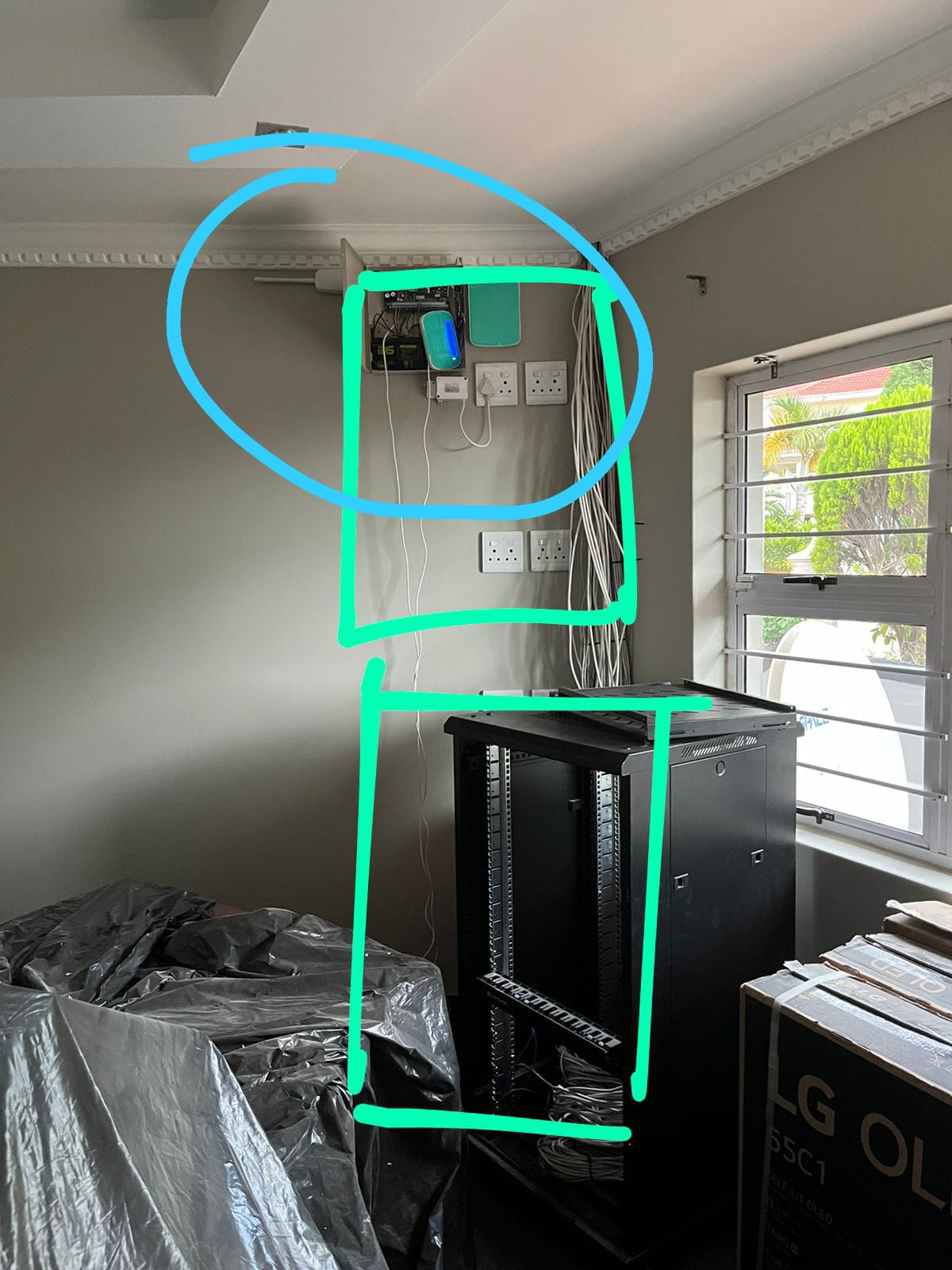
The installer should mark the cabinet before walls close
The best time to resolve cabinet depth is before finishes.
At that stage, the smart home installer, electrician, architect and builder can agree on:
- cabinet position,
- cabinet depth,
- conduit entry points,
- power requirements,
- ventilation,
- service clearance,
- future access,
- whether equipment belongs in a wall cabinet or full rack.
That conversation is far easier before plaster, paint and cabinetry.
DG Technologies’ view
For DG Technologies, cabinet planning is part of the system design.
The cabinet is where the hidden work becomes visible. If the cabinet is cramped, the whole installation becomes harder to support. If the cabinet is planned properly, the system is easier to fault-find, easier to upgrade and easier for the next technician to understand.
The cabinet depth is not a small detail.
It is one of the details that decides whether the whole installation feels professional years later.