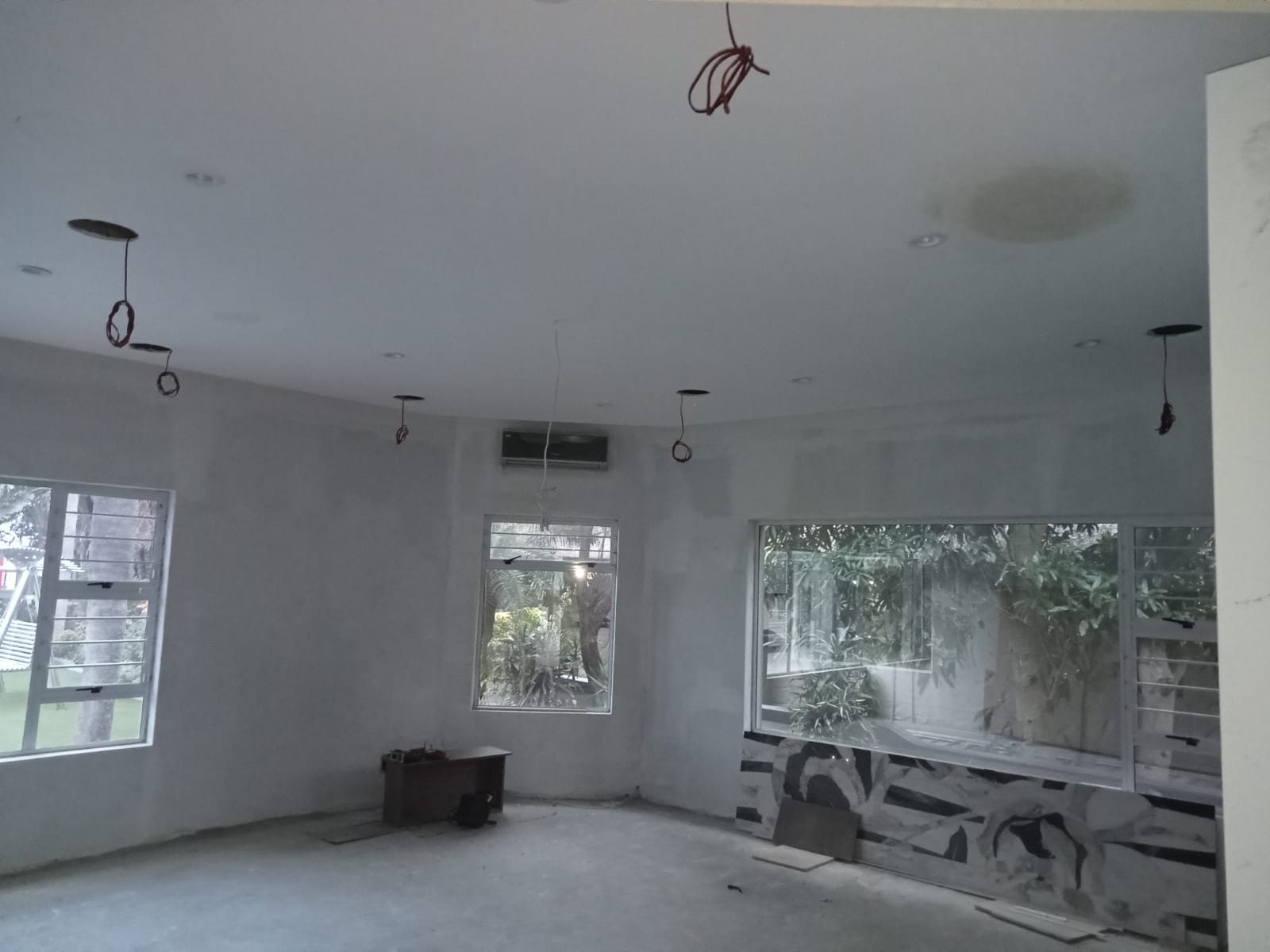
Construction dust is not harmless.
It gets into racks, fans, amplifiers, receivers, network switches, processors, connectors and ventilation paths. On an active building site, it can quietly shorten the life of expensive technology before the client has even moved in.
This is why timing and protection matter.
Equipment should not arrive too early
There is pressure near the end of a project to get everything working.
But if sanding, grinding, cutting, painting or ceiling work is still happening, sensitive equipment may be exposed to dust and debris. A rack that looks impressive during a site meeting can become a dust collector if the room is not ready.
Sometimes the best decision is to delay final equipment installation.
Dust affects cooling
Many AV and network devices rely on airflow.
Dust blocks vents, coats fan blades and settles inside equipment. Heat then becomes harder to manage. The system may still work at handover, but reliability can suffer later when the rack is full, the doors are closed and the home is being used normally.
Cooling problems often begin long before anyone notices them.
Connectors and terminations need protection
Dust also affects connection points.
RJ45 terminations, HDMI ports, speaker terminals, patch panels and fibre equipment should be treated carefully during construction. Dirty or disturbed connections can create intermittent faults that are frustrating to trace later.
Intermittent problems are often the most expensive ones to find.
Temporary power and open cabinets are a bad mix
During construction, equipment is sometimes powered from temporary circuits or left running while work continues around it.
That can create risk. Power may be unstable. Breakers may be switched off without warning. Other trades may unplug equipment to use a socket. Cabinet doors may be left open while dust is still in the air.
The technology team should decide when the rack is ready to be energised and what conditions must be in place before expensive electronics are left running.
Final cleaning should happen before final commissioning
There is a difference between making a system work and handing it over.
Final commissioning should ideally happen once the space is clean enough for the equipment to operate normally. That allows the installer to test heat, airflow, source control, Wi-Fi, CCTV and audio without construction activity interfering with the result.
If the site is still in heavy work mode, the handover test may not reflect the finished home.
The equipment room should be treated as a finished space
The head end or rack room is not a dumping area.
It should be clean, dry, powered correctly and accessible. Other trades should understand that the equipment room contains sensitive systems, not spare storage space for paint tins, tools or building materials.
That expectation needs to be set early.
DG Technologies’ view
DG Technologies sees construction protection as part of commissioning discipline.
Professional installation is not only neat wiring.
It is knowing when equipment should be installed, when it should wait, and how to protect the system from site conditions that can damage it before it has even been used.