A projector position can look correct on a drawing and still be wrong in real life.
That is because projector placement is not only about aiming an image at a screen. It involves throw distance, lens shift, mounting height, cable route, ventilation, noise, access, ceiling structure and future replacement.
If these details are ignored, the room may still work on day one, but it becomes harder to support later.
In a premium cinema room, projector positioning should be treated as part of the first-fix design.
Throw distance comes first
Every projector has a throw range. That range determines how far the projector must sit from the screen to produce the desired image size.
If the projector is too close, the image may not be large enough. If it is too far, the image may overshoot or lose brightness. If the model changes later, the new projector may not suit the same position.
That is why the projector should not be placed simply where the ceiling looks convenient.
The design should confirm:
- Screen size.
- Aspect ratio.
- Projector model or expected model class.
- Throw distance.
- Lens shift range.
- Mounting height.
- Seating and sightlines.
- Whether future replacement space is available.
This is especially important when ceilings, bulkheads or projector lifts are involved.
Lens shift is useful, but not a rescue plan
Lens shift allows the image to move without physically moving the projector. It is very useful for installation flexibility.
But lens shift should not be used as an excuse for poor planning.
If the projector is placed badly, the installer may be forced to use extreme adjustment. That can limit future projector choices and make alignment more sensitive. A better approach is to position the projector properly from the beginning and use lens shift for fine adjustment.
The cleanest installations come from geometry first, adjustment second.
HDMI and signal routes need planning
Projector cabling is one of the easiest things to underestimate.

A projector may need HDMI, fibre HDMI, HDBaseT, network, control cable, trigger cable, power and sometimes spare conduit for future formats. Long cable runs must be selected carefully because video signals can be demanding, especially with 4K, HDR and future upgrades.
We have written about source and input planning because many AV problems begin as cabling problems.
Common mistakes include:
- No spare conduit.
- Cable routes with too many bends.
- HDMI cable runs that cannot be replaced.
- Projector cables trapped inside finished ceilings.
- No network point near the projector.
- No access to extenders or power supplies.
- Assuming one cable will support every future source.
The client only sees the blank screen or handshake issue. The cause may be hidden in the ceiling.
Projectors need ventilation
Projectors generate heat.
If the projector is installed inside a hush box, ceiling recess or joinery enclosure, ventilation must be designed properly. Heat affects reliability and can shorten equipment life. Dust and humidity can also become concerns, especially in coastal homes.
A projector should not be suffocated for the sake of hiding it.
The room can still look clean, but the equipment needs airflow.
Service access is not optional
This is one of the biggest lessons from real projects.
If a projector is installed in a difficult ceiling position, the future technician must still be able to reach it. If a lift, mount, cable joint, power supply or control module fails, someone needs access without destroying the ceiling.
We have seen projector-lift and ceiling-access problems become much bigger than they needed to be because the original installation focused on concealment but not serviceability.
Good planning asks:
- Can the projector be removed safely?
- Can cables be replaced?
- Can the mount be adjusted?
- Can a lift be serviced?
- Can the ceiling opening be accessed after finishes?
- Is there enough working space?
- Has the access panel been coordinated with the interior design?
A projector that cannot be serviced properly is not a premium installation.
Ceiling structure matters
Projectors, lifts and screens need proper support.
The weight must be carried correctly. The mounting position must be stable. Vibration, ceiling movement and weak fixing points can affect alignment. If a motorised screen or projector lift is involved, the structure and access strategy should be discussed early with the builder and architect.
This is why architects should involve the AV team before ceilings close.
The best time to solve these problems is before the ceiling is built.
Think about the next projector
A cinema room may last longer than the projector.
The first projector may be replaced in five, seven or ten years. The new model may be larger, smaller, brighter, laser-based, require different ventilation, use different signal standards or have a different throw ratio.
The original installation should leave room for that future.
That means:
- Spare conduit.
- Sensible mounting zone.
- Accessible cable path.
- Adequate power.
- Network availability.
- Serviceable ceiling detail.
- Rack space for source or signal equipment.
Future-proofing does not mean predicting every future product. It means not trapping the client.
The projector is part of a sequence
In a proper cinema room, pressing one button may start a whole sequence:
- Lights dim.
- Screen drops or becomes active.
- Projector powers on.
- Receiver selects the correct input.
- Source device wakes.
- Audio mode is selected.
- The room settles into movie mode.
That sequence only feels simple if the underlying equipment is cabled and controlled properly.
This is one reason we like integrating cinema rooms into a broader Crestron Home control environment where appropriate. The client should not need to understand the technology chain every time they want to watch a film.
Good projector planning is invisible
Nobody walks into a cinema room and compliments the conduit route.
But they notice when the picture is aligned, the screen is the right size, the projector is quiet, the cables are hidden, the room starts easily and the system can be serviced without drama.
That is the point.
Projector positioning is not just installation.
It is long-term design.
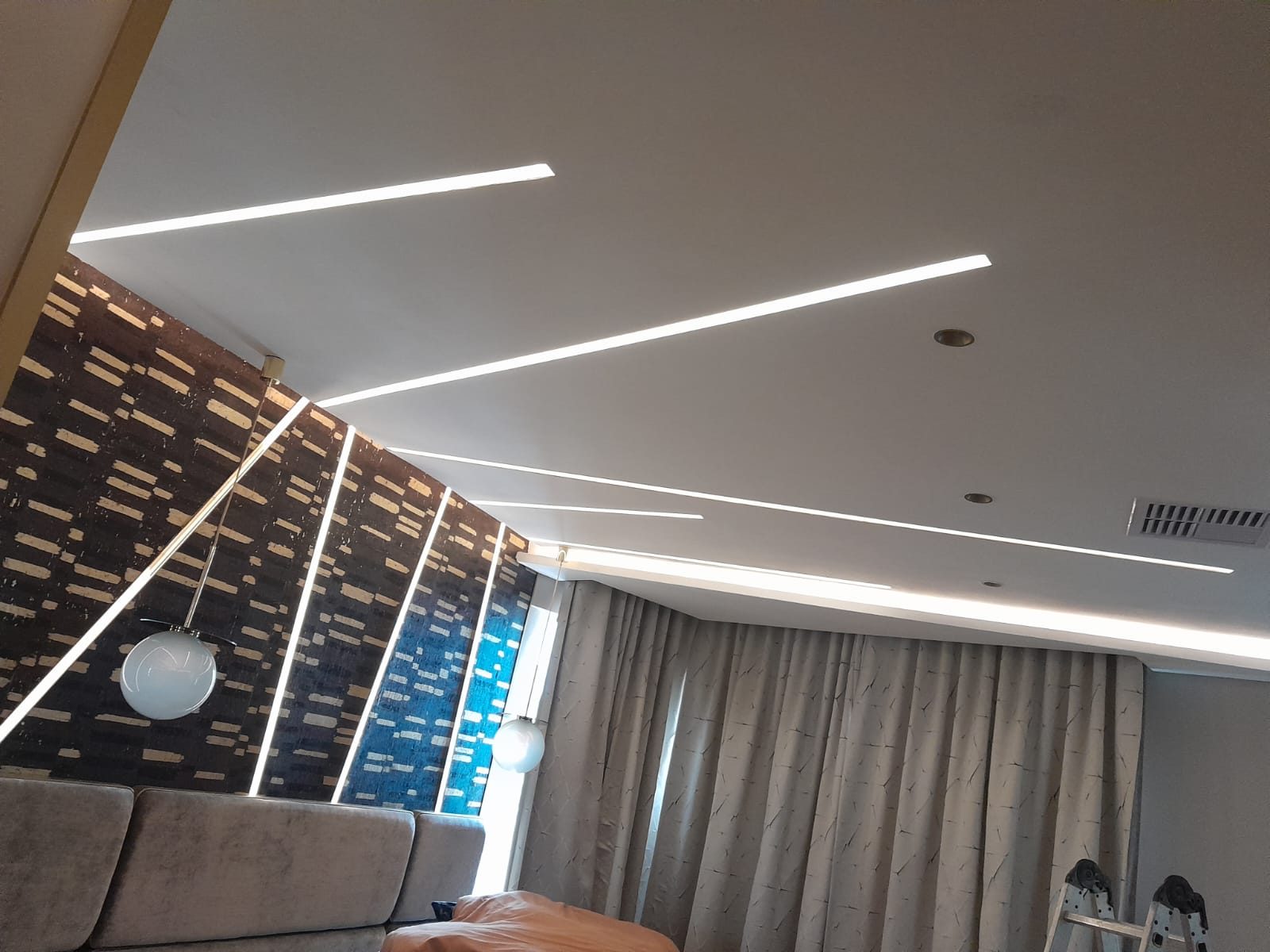
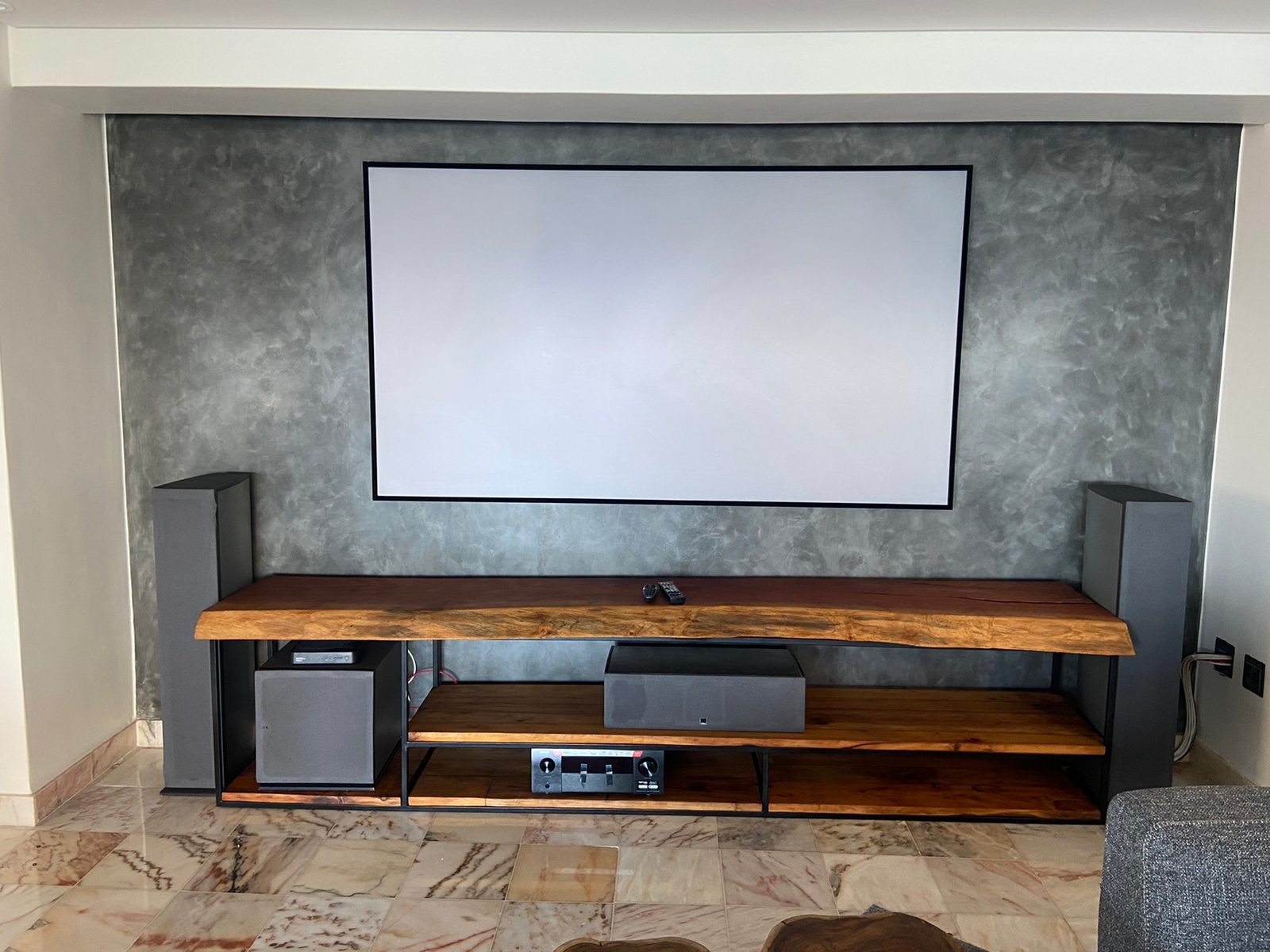
Field images from DG site work