Choosing a CCTV installer in Durban should not start with the cheapest camera package.
It should start with one question:
Will this system give you useful footage when something actually happens?
That sounds obvious, but many CCTV installations are still sold as camera counts. Four cameras. Eight cameras. Sixteen cameras. App included. Hard drive included. Installed in one day.
That may be fine for a small, simple property. But for larger homes, estates, offices, warehouses and commercial premises, the installer matters as much as the camera brand. A good CCTV installer understands the site, the network, the recording requirement, the cabling, the user experience and the support responsibility after handover.
DG Technologies provides CCTV installation across Durban and KZN with that wider view in mind.
A CCTV installer should ask what each camera must achieve
The first sign of a good CCTV installer is that they do not only ask how many cameras you want.
They should ask what you need to see.
For example:
- Do you need to identify a person at the gate?
- Do you need to see vehicles entering a driveway?
- Do you need general perimeter awareness?
- Do you need to monitor staff movement or deliveries?
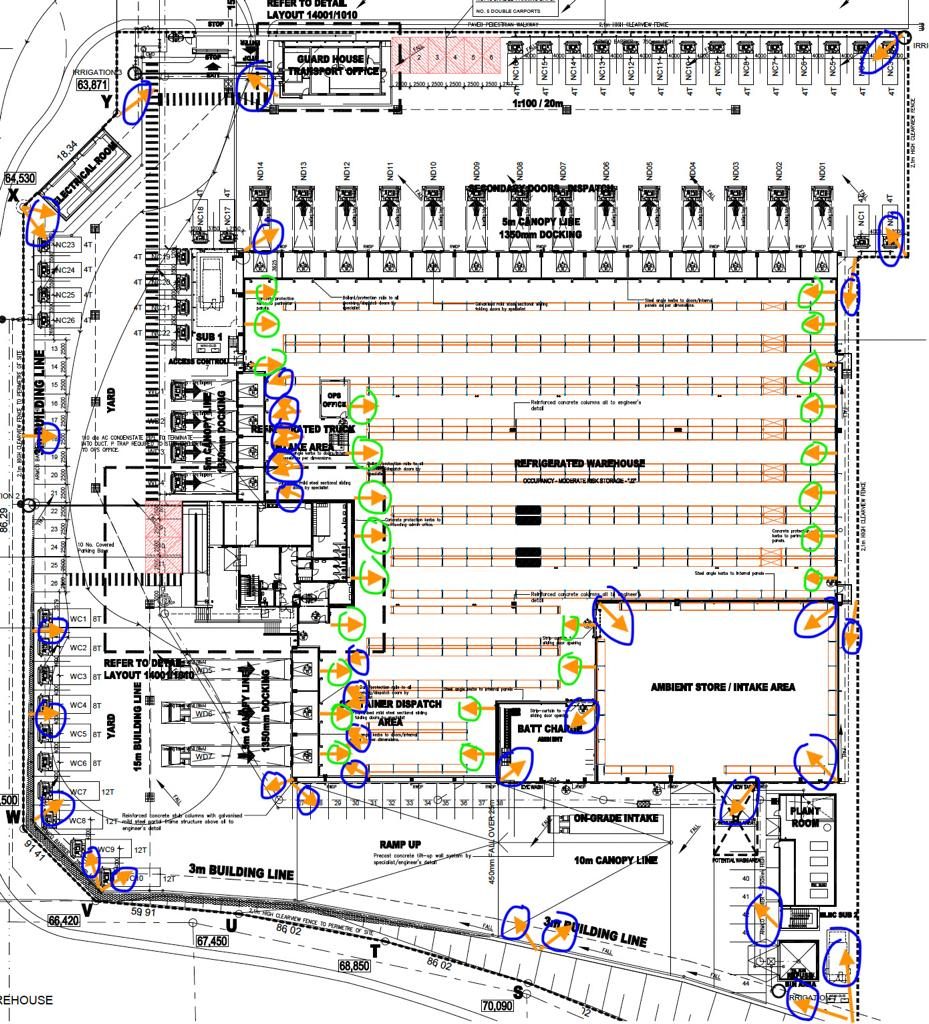
- Do you need coverage of a warehouse, cold room or loading bay?
- Do you need remote viewing from another city?
- Do you need footage that can be retrieved quickly after an incident?
Those answers affect lens choice, camera height, angle, lighting, storage and even the way footage is reviewed later.
A camera that gives a wide view of a driveway may be useful for awareness, but it may not capture a clear face. A tighter view may identify a person, but it may miss the broader context. The right answer is often a combination of views, not simply more cameras.
Cabling tells you a lot about the installation
CCTV cabling is not the exciting part of the system, but it is one of the easiest places to see workmanship.
Poor cable routes create long-term problems. Exposed cable can be damaged. Unlabelled cable makes fault finding slower. Bad terminations can cause intermittent camera dropouts. Missing conduit makes future replacement difficult. Untidy cabinets make support harder for everyone.
For new builds, camera routes should be planned before ceilings close. For existing properties, the installer should explain whether existing cabling can be reused safely or whether new routes are needed.
Reusing old cabling is sometimes sensible.
It is not always sensible.
If the cable route, quality or termination standard is wrong, the honest recommendation may be to replace it. That may cost more upfront, but it can save a lot of frustration later.
The network is part of the CCTV system
Modern CCTV is usually IP-based. That means cameras depend on switches, PoE power, network addressing, the router, the recorder and remote access.
This is where many installations fail.
The cameras may be good. The recorder may be good. But if the network is unmanaged, overloaded or badly documented, the system can become unreliable.
A professional CCTV installer should understand:
- PoE switch capacity
- IP addressing
- recorder placement
- router changes
- remote viewing
- secure app setup
- UPS backup
- cable distance limits
- network cabinet layout
At DG Technologies, this matters because CCTV often sits alongside network infrastructure, access control, Wi-Fi, automation and remote support. A camera system should not become isolated from the rest of the property technology.
Recording is not only hard-drive size
Many clients are told a system includes a hard drive, but not what that actually means.
Recording design should consider:
- number of cameras
- resolution
- frame rate
- compression
- motion recording or continuous recording
- required retention period
- remote playback speed
- who needs access
- whether the system must record during power outages
A small home may only need modest retention. A commercial site may need much longer footage availability. A holiday home owner may care more about remote access and reliable alerts. A warehouse may care about incident review and operational evidence.
The CCTV installer should explain this clearly enough that the client understands what they are buying.
App setup should be controlled properly
The app is the part most clients touch every day.
It should be set up cleanly, but it should also be set up responsibly. Not every staff member, contractor or guest should have the same access. Passwords should not be shared casually. Admin rights should be controlled. Remote access should be documented.
A good handover should cover:
- live view
- playback
- event search
- notification settings
- user permissions
- password ownership
- basic support steps
The goal is not to make the client technical. The goal is to make the system usable.
Ask what happens after installation
The best CCTV installer is not only the person who can install cameras quickly.
It is the person who can support the system later.
Before accepting a CCTV quote, ask:
- Will the cables be labelled?
- Will the recorder and network layout be documented?
- Who manages remote access?
- What happens if the fibre router changes?
- Is the system protected against load shedding?
- Can footage be found quickly?
- Are future camera additions possible?
- Who supports the app if phones are changed?
Those questions separate a camera installation from a professional security system.
If you are looking for a CCTV installer in Durban or KZN, choose the person who can explain the decisions behind the quote. The camera brand matters, but the design, cabling, network, recording and support will decide whether the system is useful years later.