There is something stubborn about records.
Technology has tried very hard to kill them. Radio arrived. Tape arrived. CD arrived. MP3 arrived. Streaming arrived. Whole-home audio arrived. Yet vinyl keeps finding its way back into serious listening rooms.
That is why the old radiogram thread in the Durban archive is worth writing about.
It is not nostalgia for the sake of nostalgia. It is a reminder that some audio habits survive because they are physical, deliberate and emotional.

Before the smart speaker, there was the furniture
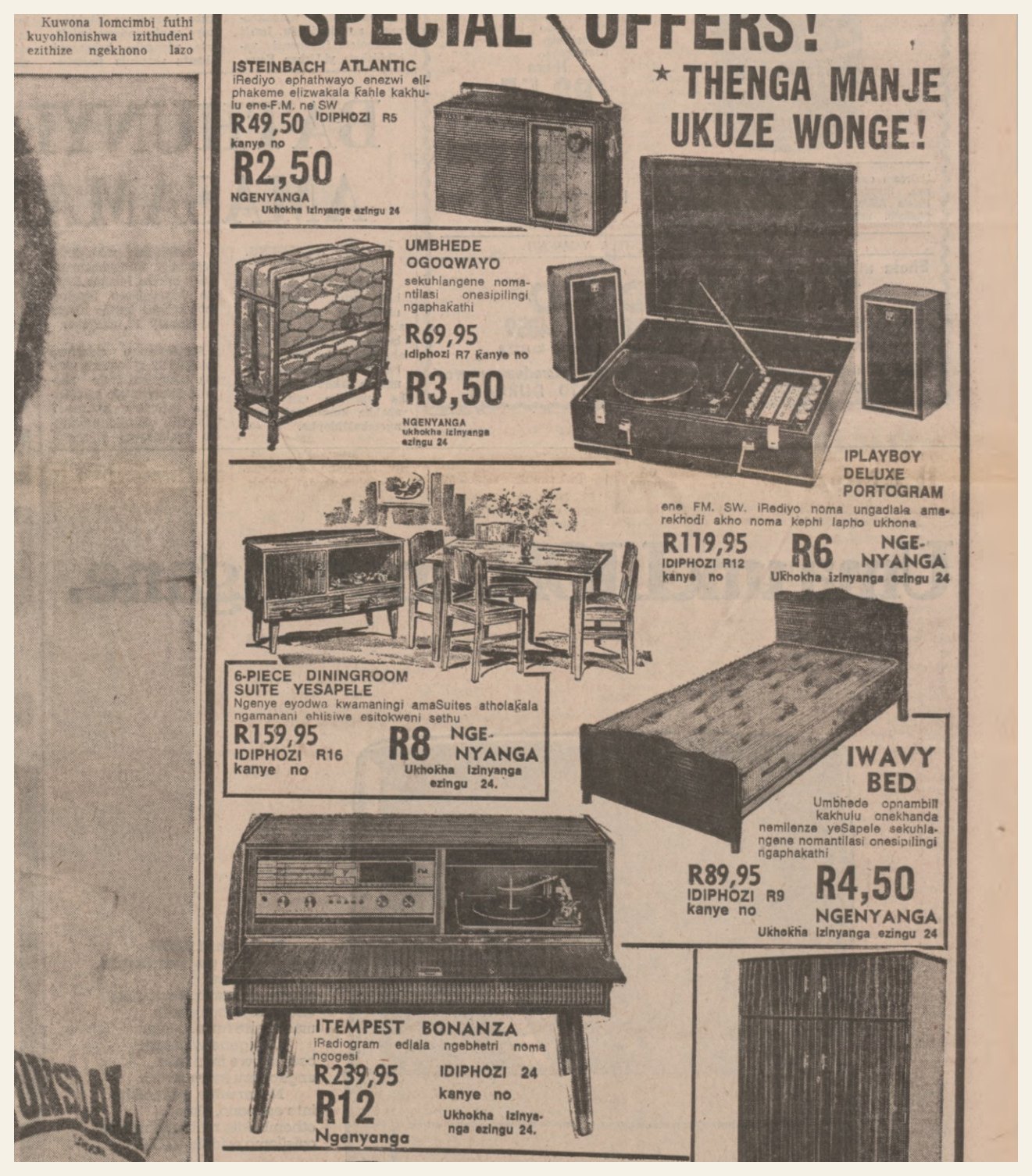
The old radiogram was not just an audio device.
It was furniture.
It occupied a room. It had a lid, a cabinet, a radio section, a turntable and a physical presence. In a way, it solved one problem modern homes still wrestle with: how do you make technology belong in a room instead of looking like clutter?
Modern interior designers often want the equipment gone. Speakers hidden. Amplifiers in a rack. Sources controlled from a touchscreen. Cabling invisible.
The radiogram did the opposite. It made the equipment part of the furniture.
Both approaches are trying to solve the same problem: technology must have a place.
The school radiogram mattered because records mattered
One 1952 archive reference mentions a school console radiogram and the need for suitable records.
That detail matters.
The machine was only useful if the source material was right.
That is still true in premium audio. A beautiful amplifier and a serious pair of speakers will not rescue a badly matched source, a poor cartridge, a noisy phono stage or a room that has not been considered.
The chain matters.
It mattered when the source was a record in a school radiogram.
It matters now when the source is a turntable, streamer, server, phone, TV, AirPlay device or multiroom audio matrix.
Radiogram to music centre
By the late 1970s and early 1980s, the archive adverts start showing music centres: record deck, cassette, radio, speakers and sometimes battery or mains operation.
That is the bridge between the old radiogram and the modern integrated audio system.
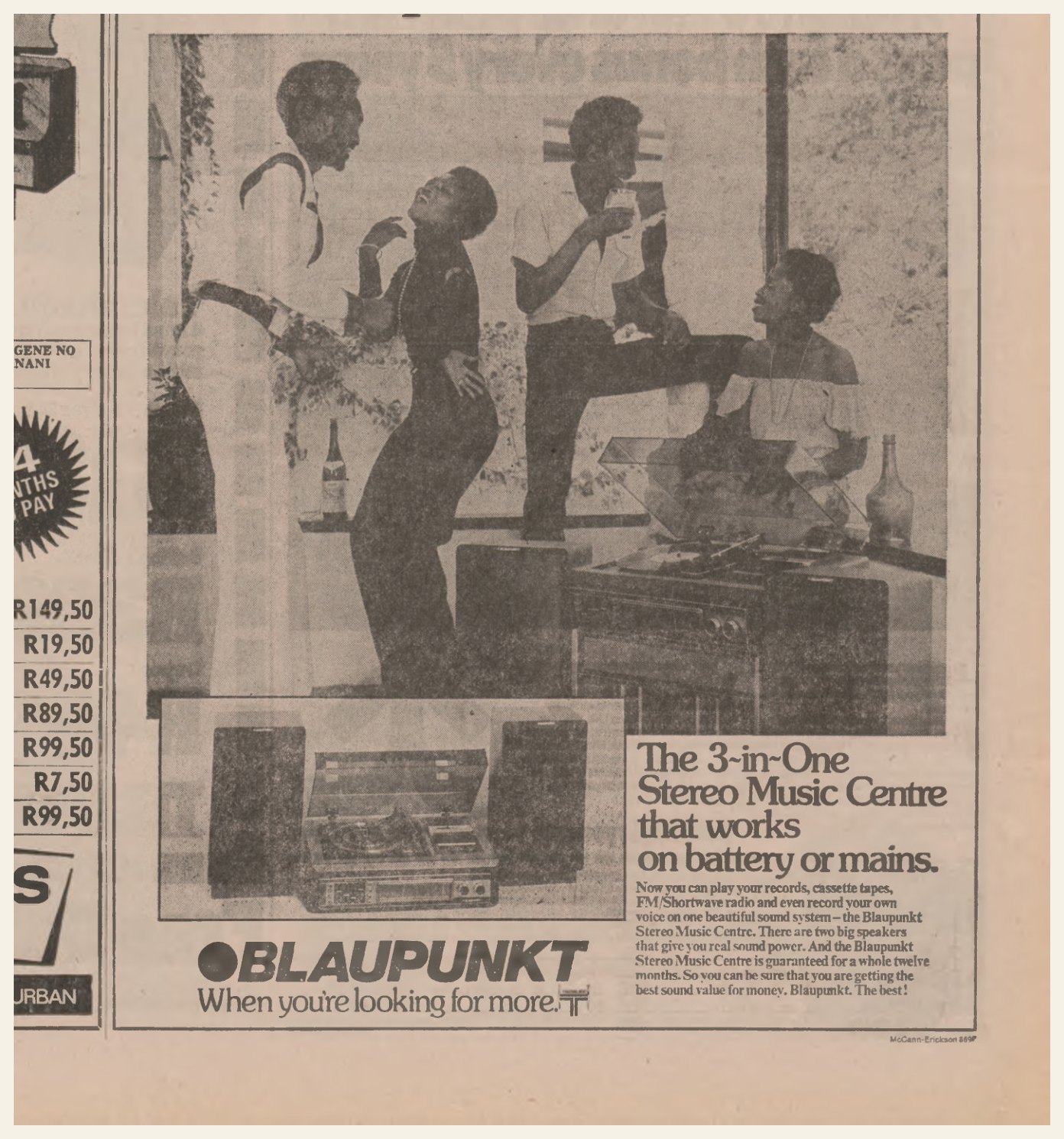
The product became more compact, but the idea was the same: one system that gave the household access to music.
Today, a Crestron, Sonos, WiiM, Russound or high-end hi-fi system may look completely different. The sources may be digital. The control may be an app. The speakers may be in the ceiling. The amplifiers may be in a rack.
But the domestic question is still familiar:
Where does the music live in the house?
Why vinyl survives in serious rooms
Vinyl is not always the most convenient option.
That is almost the point.
You choose a record. You handle it. You place it on the platter. You lower the stylus. You sit down.
That ritual changes the way people listen.
Modern manufacturers know this. Pro-Ject still builds turntables and hi-fi components as a living category, not as a museum exercise. What Hi-Fi?’s 2026 high-end record-player guide shows how extreme the category can become, with serious turntables running from expensive specialist pieces into money-no-object territory.
So when a client wants vinyl in a modern home, I do not treat it like a novelty.
It needs proper planning:
- a stable surface
- isolation from vibration
- a suitable cartridge
- a quiet phono stage
- correct grounding
- sensible cable routing
- the right amplifier input
- speaker positioning
- storage for records
- a room that suits listening
The record player may be old in principle, but the installation standard should be modern.
What this means for DG-style audio design
The radiogram teaches one thing very well: audio is not only electronics.
It is furniture, room layout, behaviour, memory and taste.
That is why premium audio cannot be designed from a product list alone. A client who wants a turntable in the bar is making a different request from a client who wants invisible background music in the kitchen, or a reference cinema room, or a patio that can play loudly without annoying the rest of the house.
The system has to respect the way the person listens.
Some homes need hidden distributed audio.
Some need a proper stereo listening position.
Some need both.
And sometimes, after all the streaming services, apps and automation systems, the most interesting thing in the room is still a record turning slowly on a platter.