The eThekwini annual reports in the Durban archive are not glamorous reading, but they are useful.
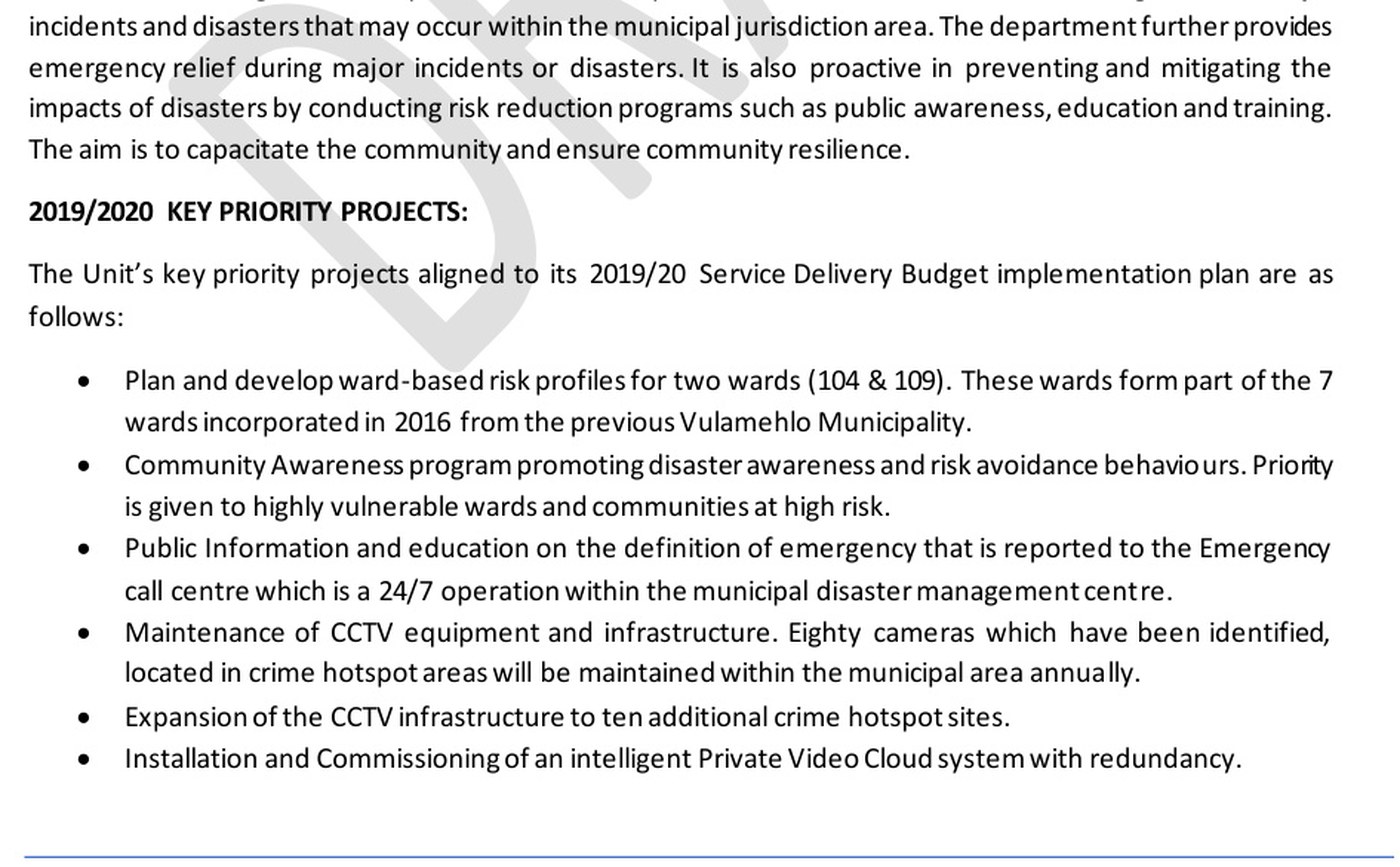
One 2019 report lead refers to the lack of an integrated CCTV system and then to the commissioning of an intelligent private video cloud system with redundancy. It also refers to maintaining cameras in crime hotspot areas and expanding CCTV infrastructure to additional sites.
That language is important because it shows what happens when CCTV is treated as infrastructure.
Commercial CCTV is not a domestic camera pack
At a certain scale, CCTV becomes closer to network engineering than to simple camera installation.
The questions change:
- Where are the sites?
- How are they connected?
- How much bandwidth is available?
- Where is the recording stored?
- Who needs live viewing?
- Who needs playback access?
- What happens if one link fails?
- How is power protected?
- Can maintenance happen without shutting the site down?
Those are the same questions we ask on serious commercial sites.
Integration matters more than camera count
It is easy to sell camera numbers.
It is harder to design a system where people can use the footage properly.
On a larger site, a good CCTV system may need:
- a proper cabinet or rack
- PoE switching with headroom
- fibre between buildings or distant points
- surge protection and power conditioning
- sensible monitor views
- clear camera naming
- documented passwords and access rights
- maintenance routes
- night testing
- operator handover
Without those pieces, the camera may technically record, but the system may still fail the person responsible for using it.
Why the archive helps our modern explanation
The eThekwini language gives us a public, local example of the same shift we see in private commercial work.
CCTV starts as cameras.
Then it becomes a platform.
Then it becomes part of operational infrastructure.
That is exactly why DG Technologies does not want to chase small residential CCTV jobs as our primary focus. The work we are better suited to is larger, more structured, and more consequential: warehouses, schools, estates, offices, industrial sites and multi-building properties where design quality matters.
The practical lesson
If a commercial CCTV quote only talks about the cameras, it is probably incomplete.
The better conversation is about the system:
- what must be seen
- who must see it
- when they need it
- where the video travels
- where it is stored
- how it is protected
- how it will be maintained
That is the difference between installing cameras and building usable surveillance infrastructure.
Research note
This article uses eThekwini municipal reports as historical and public-sector context for integrated CCTV thinking. It does not imply that DG Technologies worked on those municipal systems.