The archive has several small references to infra-red remote controls in television and consumer-electronics adverts.
That may seem ordinary now, but it is worth pausing on.
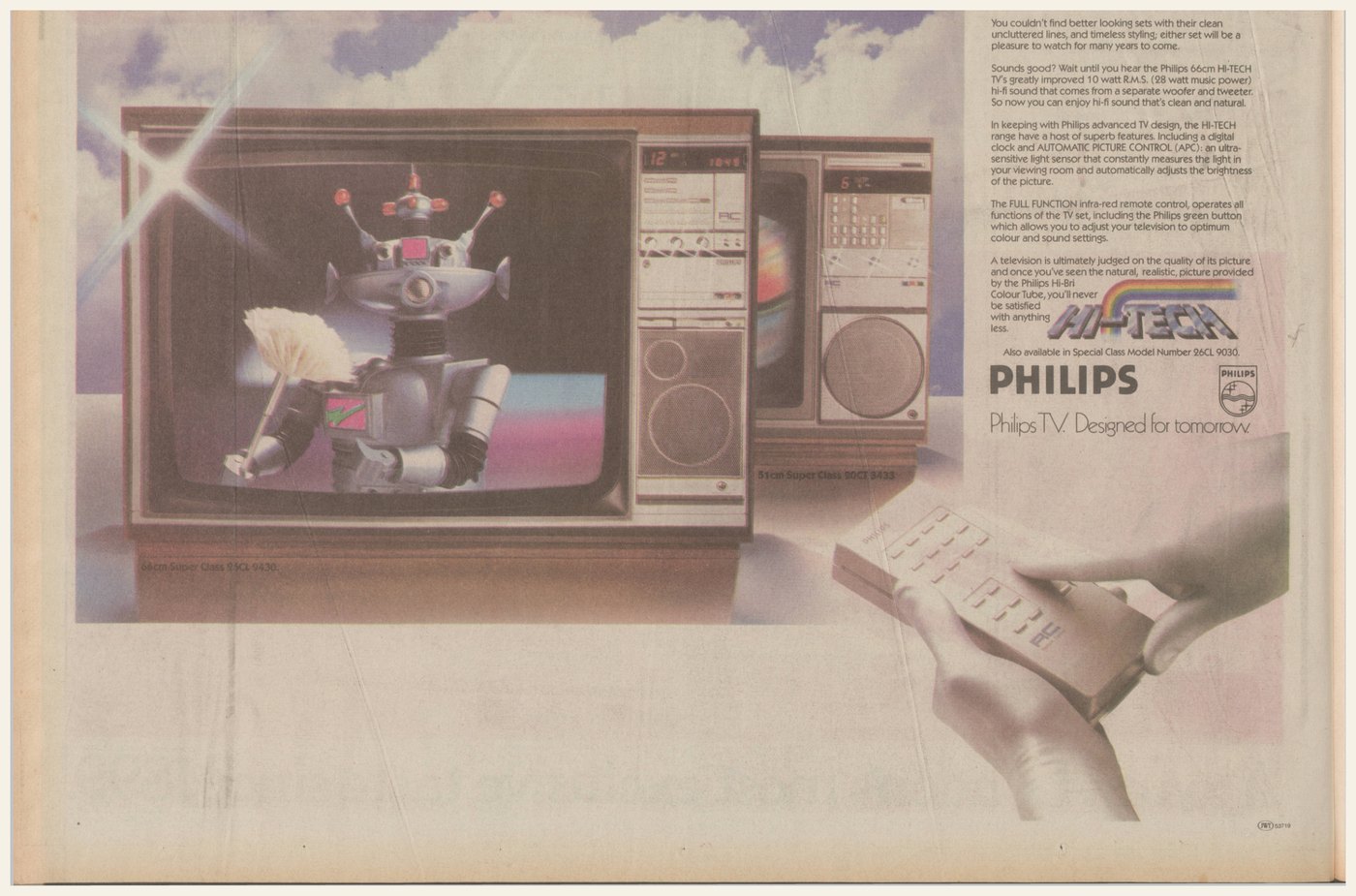
At the time, remote control was a selling point because it reduced friction. You did not have to walk to the television. You could change the experience from where you were sitting.
That is still the promise behind home automation.
The difference is that we now have far more power to make the interface either brilliant or unbearable.
The remote was never really about the remote
An infra-red remote was not valuable because it was a plastic handset.
It was valuable because it made the machine easier to live with.
The same rule applies to Crestron touchscreens, mobile apps, keypads, voice control and handheld remotes. The hardware is only the carrier. The real design problem is how quickly the client gets from intent to result.
If someone wants music, they should not need to understand zones, sources, network topology or amplifier routing.
If someone wants to watch TV, they should not need to know which HDMI input the matrix is using.
If someone wants a room to feel right, they should not need to remember which dimmer channel controls which fitting.
Why modern systems can still go wrong
Modern control systems are powerful, but that power can tempt installers into building interfaces around equipment rather than people.
That is where friction appears:
- too many buttons
- rooms named differently across devices
- source names that make sense only to the installer
- guests needing training before they can watch television
- homeowners forced into app workflows that do not match how they think
The 1980s remote-control promise was simple: sit there and control it.
Modern smart homes should honour that promise, not bury it under complexity.
The DG Technologies view
I care deeply about how a client thinks.
Some people want one beautiful app. Some want physical keypads. Some want a dedicated remote. Some want different logic in guest rooms from the main bedroom. Some want no visible controls at all unless they are needed.
This is not a small detail.
Control is where the client meets the system every day.
The archive shows the beginning of a control story that moved from buttons on a TV, to infra-red remotes, to centralised control, to app-based automation.
The lesson is not that newer is automatically better.
The lesson is that every generation of technology has been trying to answer the same question: can the user change the room without thinking about the machinery behind it?