One of the most interesting things in the Durban archive is how familiar some of the old problems feel.
In 1983, Ilanga carried references around TV1, TV2 and aerial reception. Different era, different equipment, same kind of frustration: the client bought the device, but the signal was not behaving the way they expected.
That problem never disappeared.
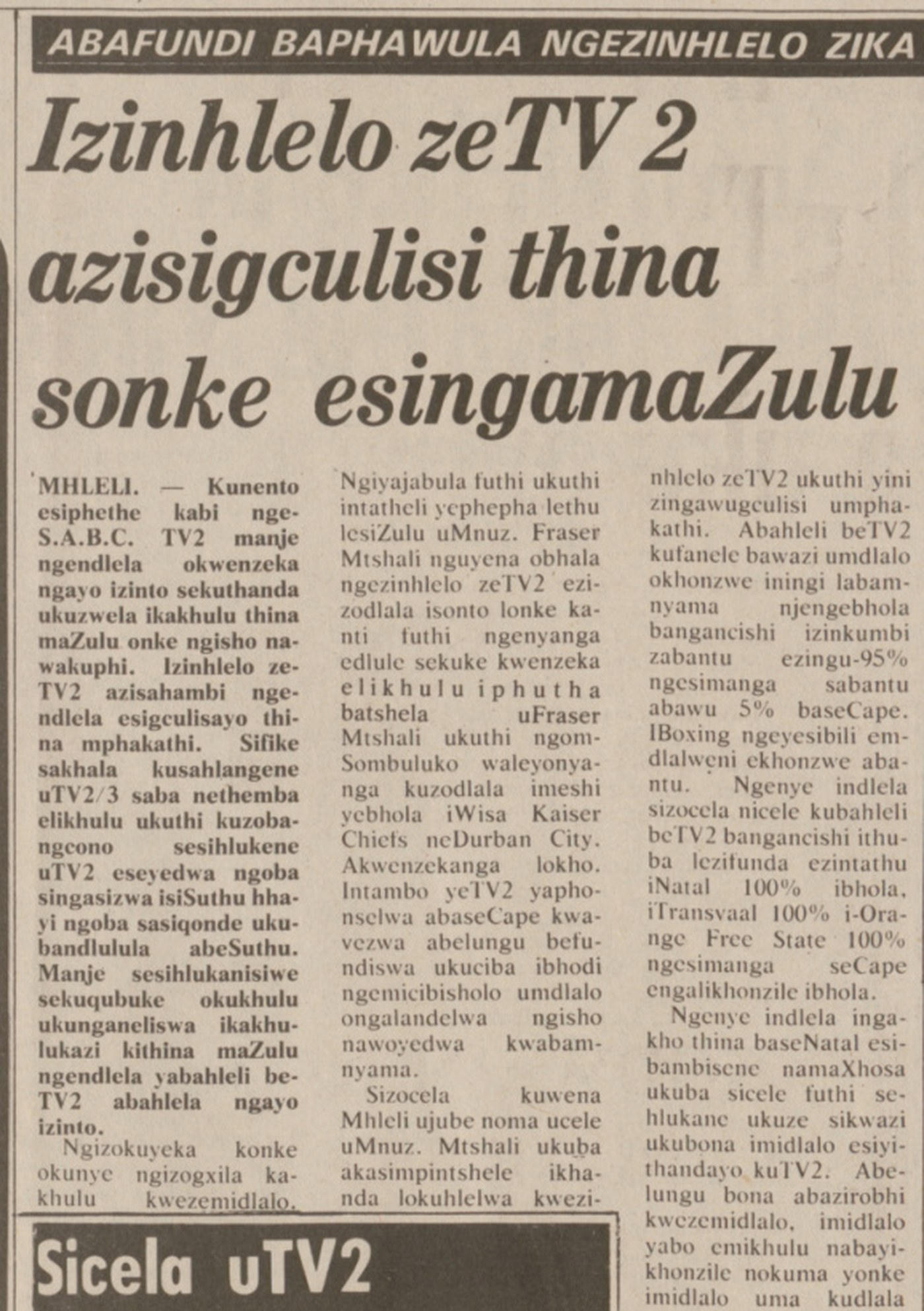
It just moved.
The old question was aerial reception
In the early 1980s, the practical conversation was often about TV sets, aerials, reception and whether a channel could be watched properly.
For the person at home, the technical details were not the point.
The point was simple: I bought the TV, why can I not watch what I want to watch?
The modern version is HDMI, fibre and networks
Today the same frustration can appear as:
- no signal on a TV
- DStv not appearing in the right room
- an Apple TV showing on one display but not another
- a projector not locking to the source
- HDMI handshakes failing after a power event
- a boardroom display not accepting the laptop resolution
- a long cable run behaving differently from a short one
- a streaming device disappearing from the network
The consumer sees a screen.
The integrator sees a chain.
Source, cable, extender, switch, matrix, display, control system, power, EDID, network, firmware and user behaviour all matter.
Why signal paths must be designed early
This is why we push for proper AV planning before finishes close.
A television point is not only a hole in a wall. A boardroom display is not only a bracket and a screen. A cinema projector is not only a projector.
The route matters.
The conduit size matters.
The pull distance matters.
The cable type matters.
The service access matters.
Once walls are painted, ceilings are closed and cabinetry is installed, every signal problem becomes more expensive to correct.
The Durban signal thread
The archive gives us a local way to explain something we already know from site work.
Durban homes and businesses have been fighting signal quality problems for decades. Aerials, television sets and VCRs were one chapter. Fibre HDMI, streaming devices, AV-over-IP, DStv distribution and boardroom presentation systems are the modern chapter.
The best installations are not the ones with the most impressive equipment list.
They are the ones where the signal path was understood before the equipment was bought.
Research note
This article uses Ilanga archive references as historical context around TV reception, aerials and early consumer AV equipment. It connects that context to DG Technologies’ modern AV distribution work without claiming that the old systems and current systems are technically equivalent.