Projection has always been more practical than people think.
The archive includes a 1951 reference to funds for a cinema projector at Edendale Community Hall, and a 1983 classified advert for cinema projectors with automatic changeover, large speakers and Cinemascope lenses.
That is not a modern home cinema, obviously.
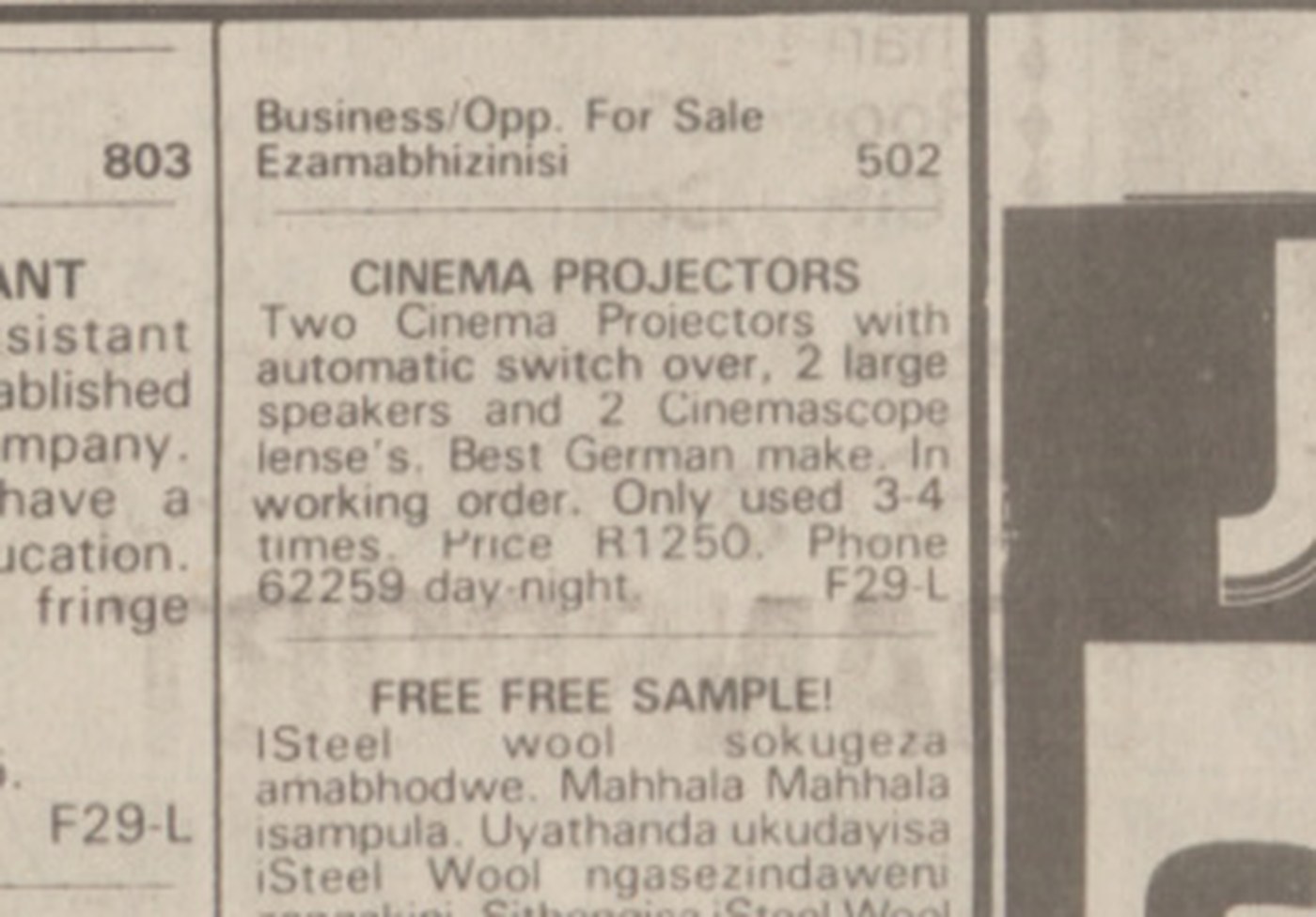
But it does show the same old truth: a good projected image is not just about the projector.
It is about the room, the sound, the screen, the control, the source and the people using it.
Projectors do not live alone
When someone asks for a projector today, I immediately think beyond the projector:
- throw distance
- screen size
- seating distance
- ambient light
- ceiling height
- projector mounting
- cable route
- HDMI or fibre path
- audio format
- speaker placement
- ventilation
- control method
- service access
The old cinema projector advert included speakers and lenses in the same breath. That makes sense. Projection was already part of a system.
Modern cinema rooms are the same.
Why a TV is sometimes the better answer
Not every room should have a projector.
In a bright living room, a large TV may be more practical. In a controlled cinema room, a projector and screen can be magic. In a boardroom, the decision depends on ambient light, viewing distance, presentation type and service expectations.
The mistake is deciding from screen size alone.
A 120-inch image that looks washed out is not better than a smaller image that works every day.
The Durban link
Durban homes and venues add their own practical issues: humidity, coastal air, concrete structures, roof-space access, power quality and bright daylight.
That means projector planning has to happen early.
If the ceiling closes before cable routes, speaker positions, screen recesses and equipment locations are understood, the project becomes more expensive than it needed to be.
The history is useful because it strips away the novelty.
Projection has been around for a long time.
The difference between a good installation and a frustrating one has always been the same: someone has to design the whole experience, not just sell the projector.