One of the most useful support questions is also one of the simplest:
Who was onsite before the fault appeared?
In a connected property, many contractors can affect the technology system without meaning to.
The fibre provider, electrician, alarm technician, gate company, cabinet maker, builder, painter, solar installer, air-conditioning contractor or satellite technician may all work near cables, cabinets, power points, access points or control equipment.
Each person may be doing their own job.
But the systems are connected.
A fault may be caused outside the obvious area
The symptom may appear in the lounge.
The change may have happened in the garage rack.
The camera may stop recording after an electrician moved a circuit.
The Wi-Fi may become unstable after a fibre router was replaced.
The music may stop after a cabinet was modified.
The automation app may fail after an IT provider changed network settings.
This is why support should not only ask what is broken. It should ask what happened nearby, recently and elsewhere on the property.
Recent visitors create a useful map
Knowing who was onsite helps the technician build a fault map.
If a fibre technician visited, check router, WAN, DHCP, Wi-Fi, IP reservations, remote access and network handover.
If an electrician visited, check power, breakers, UPS circuits, DB work, ceiling routes and low-voltage cable damage.
If a cabinet maker visited, check ventilation, cable strain, rack access and equipment movement.
If a gate technician visited, check relay interfaces, access control inputs and network links.
If a painter or builder visited, check access points, sensors, wall plates, cable routes and covered boxes.
This does not prove fault.
It gives direction.
The question must be asked carefully
Good support is not about blaming other trades.
It is about finding the truth quickly.
Most cross-trade faults are accidental. Someone unplugs a device to use a socket. Someone moves a cable out of the way. Someone changes a router because that is what their job required. Someone cuts what they think is old cabling because the cable route was not labelled.
The client does not benefit from finger-pointing.
The client benefits from a calm investigation.
Shared spaces need clearer rules
Equipment rooms, roof spaces, gate pillars, DBs and AV cabinets are shared risk areas.
Several contractors may need access to them.
That is why important systems should be labelled, documented and protected. A rack should not rely on memory. A cable route should not rely on someone guessing. A network cabinet should not be treated as a spare plug cupboard.
For large homes, estates and commercial sites, contractor coordination is part of long-term reliability.
Photos after contractor visits can help
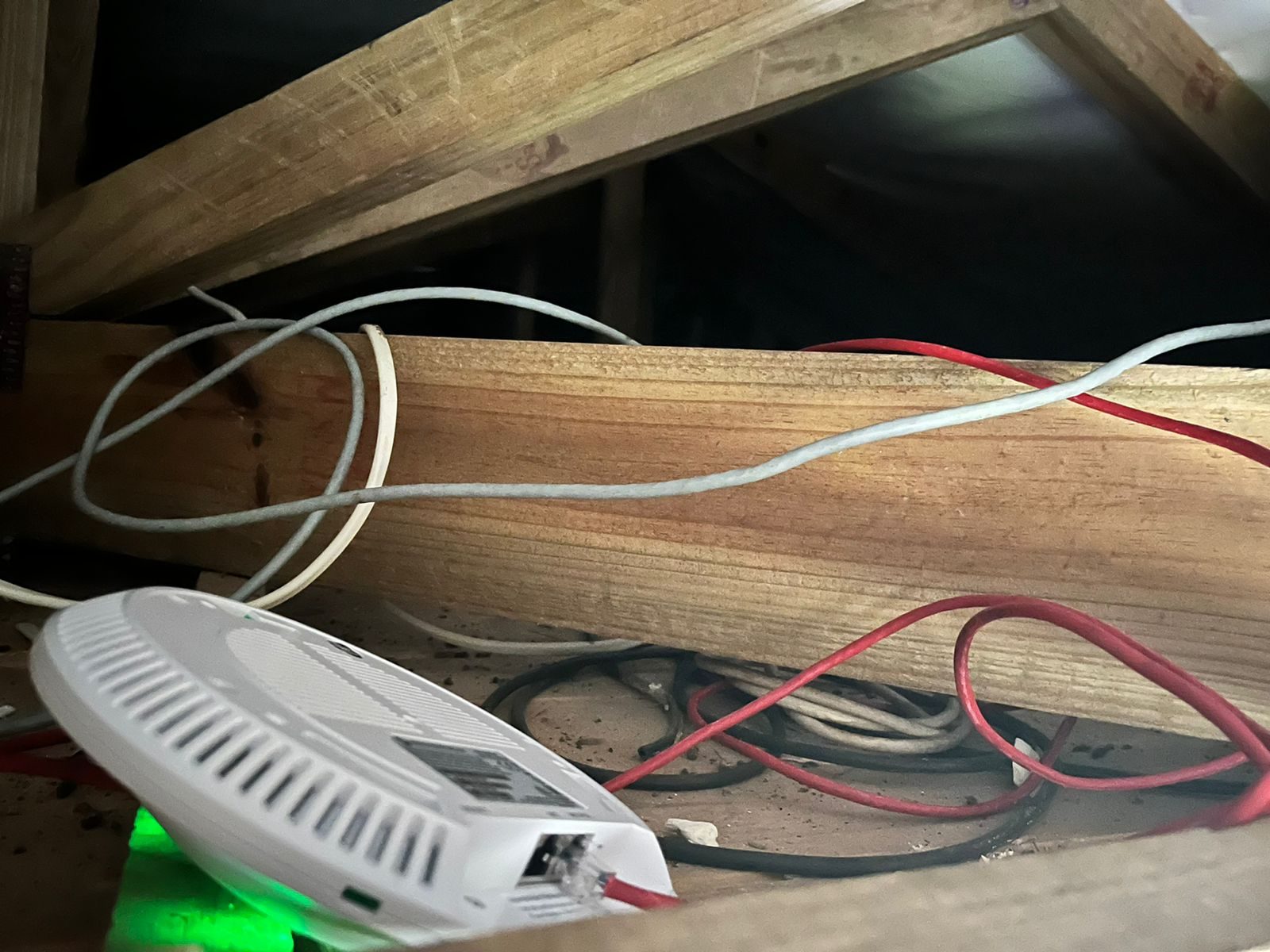
If another service provider works near a rack, cabinet, gate controller, fibre box, DB or ceiling access point, a quick photo after the visit can be useful.
It shows the support team what changed.
It may also protect the contractor, because the photo can show that equipment was left correctly.
This is especially useful in holiday homes or managed properties where the owner may not be onsite.
Professional systems need professional change awareness
DG Technologies has seen many faults that were not caused by equipment failure.
They were caused by change.
A serious support process should understand that.
When a client says the system was working and now it is not, the next question should not always be, “Which product failed?”
It should often be:
Who was onsite, and what did they touch?