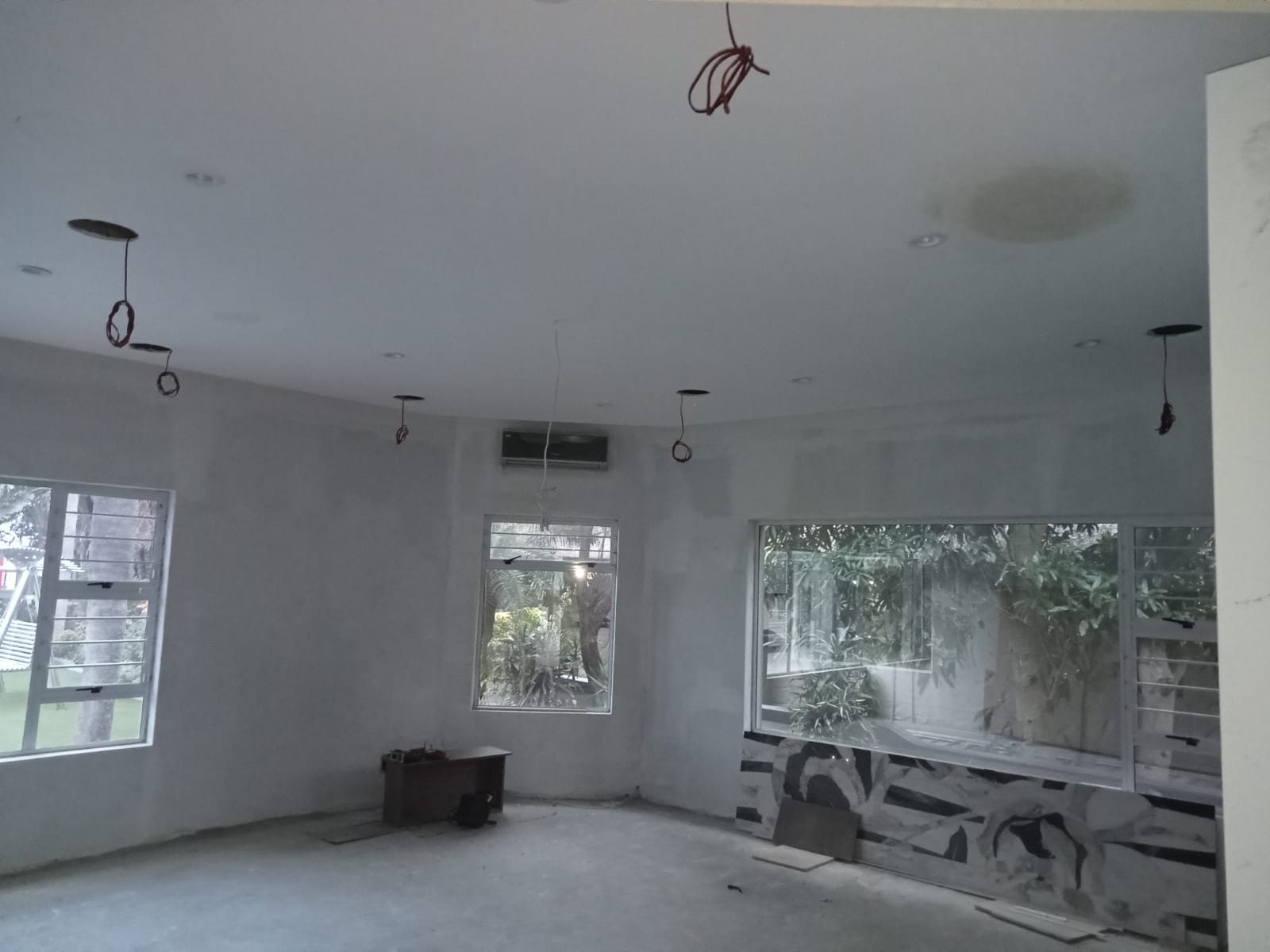
I have no problem hiding Wi-Fi access points when it is done properly.
In South African homes, with concrete and brick everywhere, placing an access point above a rhino board ceiling or near a speaker access point is often perfectly workable.
The important rule is simple:
We must be able to get to it later.
Hidden must not mean unreachable
An access point may need attention years after installation.
It may need:
- a reset
- a firmware update
- a replacement
- a cable test
- a re-adoption
- a power check
- a physical inspection
If it has been sealed into a ceiling with no access, a small support job becomes a building job.
That is bad planning.
Firmware can require physical access
Most firmware updates are handled through the network.
But not always.
Sometimes a device becomes unresponsive. Sometimes a unit has been offline for too long. Sometimes a manual reset is needed. Sometimes the technician needs to physically identify which access point is which.
If the access point is hidden but reachable, that is manageable.
If it is hidden and unreachable, the support cost jumps.
Speaker holes can be useful access points
One practical approach is to position hidden access points near speaker cut-outs or other serviceable openings.
That gives the room a clean visual finish while still allowing future maintenance.
The access point does not have to be proudly displayed in the middle of the ceiling if another position works technically and can be reached later.
The decision should balance:
- coverage
- cable path
- ceiling depth
- service access
- aesthetics
- future replacement
Architects should mark access, not only position
On drawings, an access point position is useful.
But the access method is just as important.
The drawing should make it clear how the technician will reach the unit after the ceiling is closed.
That can prevent a lot of arguments later when the room is finished and nobody wants to cut into a ceiling.
The lesson
I am not against discreet Wi-Fi.
I am against unserviceable Wi-Fi.
If an access point can be hidden without hurting performance and without blocking future access, that is often a good solution.
But every hidden device must have a maintenance plan.
The best installations disappear visually, not operationally.