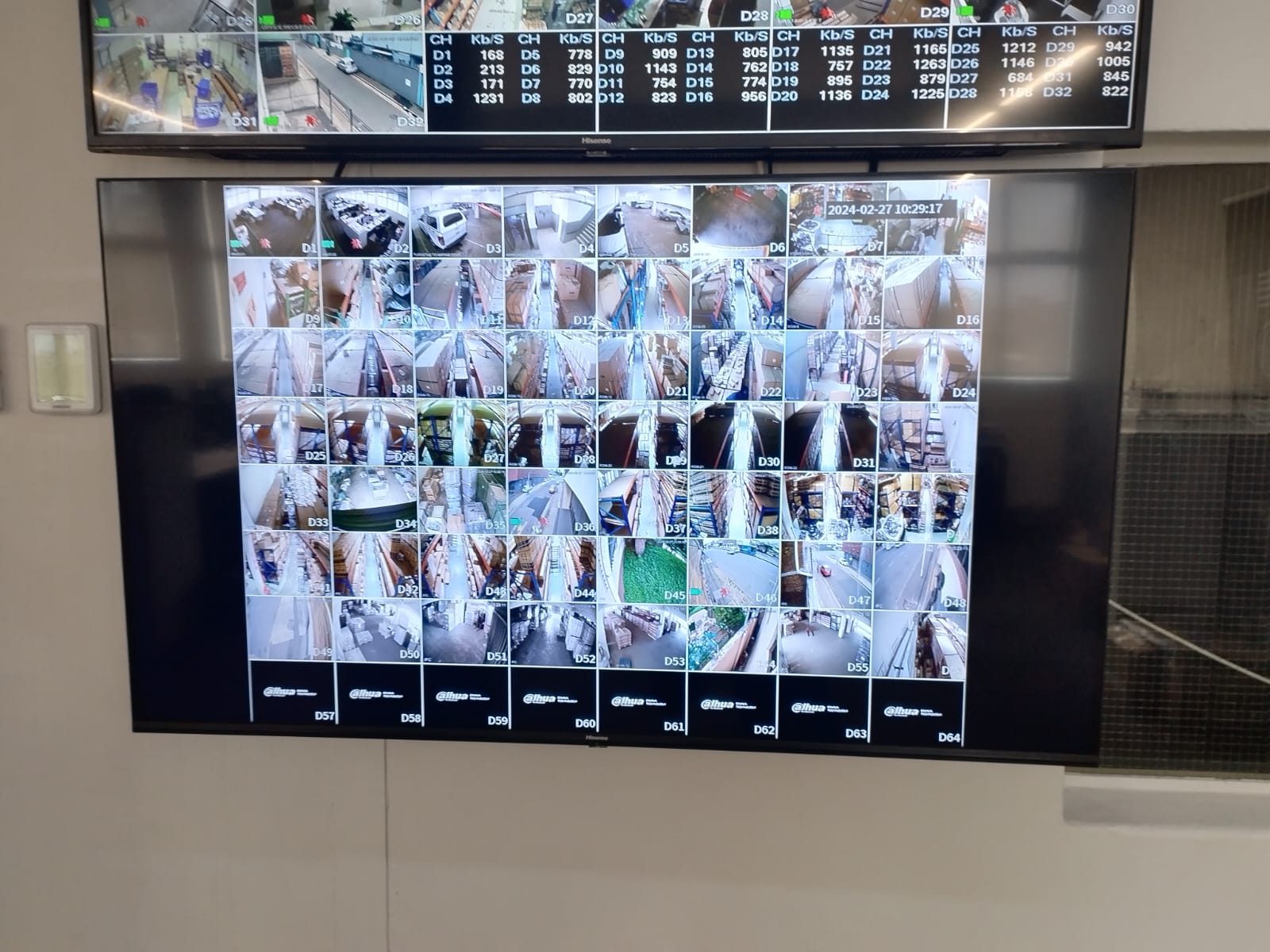
A CCTV camera showing live video is not the same as a CCTV system recording properly.
That distinction matters.
Many clients only discover recording problems when something has already happened. They open the app, search for playback and realise there is no footage, the hard drive is missing, the recording schedule is wrong, the cameras are offline, the time is incorrect, the recorder has overwritten sooner than expected or remote access was never tested.
At that point, the conversation is too late.
DG Technologies believes CCTV recording should be proven before the client needs evidence.
Live view is only the first test
Live view confirms that the camera can currently send an image.
It does not prove that the system is storing that image.
A proper handover should confirm recording. The NVR must have a suitable hard drive installed. The cameras must be assigned to record. The schedule must be correct. Playback must be tested. The date and time must be accurate. The client should know how to search footage. Remote access should be checked if the client expects to view the system away from site.
This is especially important for business premises, warehouses, estate homes and holiday properties where the owner may not be on site every day.
If the client is travelling, remote viewing and recording confidence become even more important.
Storage should match the risk
The size of the hard drive is not a random decision.
It affects how many days of footage the system can retain.
Retention depends on camera count, resolution, frame rate, compression, motion recording, continuous recording, audio where applicable and the client’s risk profile. A small home system and a large commercial site should not be treated the same way.
DG Technologies prefers to discuss recording expectations clearly:
- How many cameras are installed?
- Which areas are critical?
- Is recording continuous or motion-based?
- How many days of footage should be available?
- Is night footage important?
- Who needs remote access?
- Who knows how to export footage?
- What happens if the recorder reports a disk error?
Those questions are not technical clutter.
They decide whether the system will be useful after an incident.
Playback should be part of handover
Clients often think they will figure out playback when they need it.
That is risky.
During an incident, people are under pressure. They may be angry, worried or trying to help police, security staff, insurance assessors or management. That is not the ideal time to learn how to search a recorder.
DG Technologies prefers to show the client or responsible staff how to:
- open playback;
- select the correct camera;
- search by date and time;
- identify motion events where available;
- export a clip;
- check whether the recorder is healthy;
- understand which cameras are most useful for faces, plates, doors or movement.
This is where a CCTV system becomes operational, not just installed.
Remote access should not be assumed
Remote viewing can fail for reasons unrelated to the camera.
The router may change. The internet connection may be unstable. Passwords may be reset. The mobile app may be logged out. The recorder may sit on a different network. Port forwarding or cloud access may not be configured correctly. The client may have a new phone.
That is why remote access needs responsible setup and testing.
DG Technologies does not want to discover during an emergency that the client cannot get into the system.
If remote access matters, it should be configured, documented and checked during handover.
A useful CCTV system is evidence-ready
The purpose of CCTV is not only to see what is happening now.
It is to help answer what happened, when it happened and who was involved.
That requires more than cameras.
It requires recording, storage, time accuracy, camera naming, playback training, app access, health checks and a clear understanding of which views provide useful evidence.
DG Technologies treats those details as part of professional CCTV installation.
Because a camera that looks good on screen but records nothing useful is not a security system.
It is decoration.