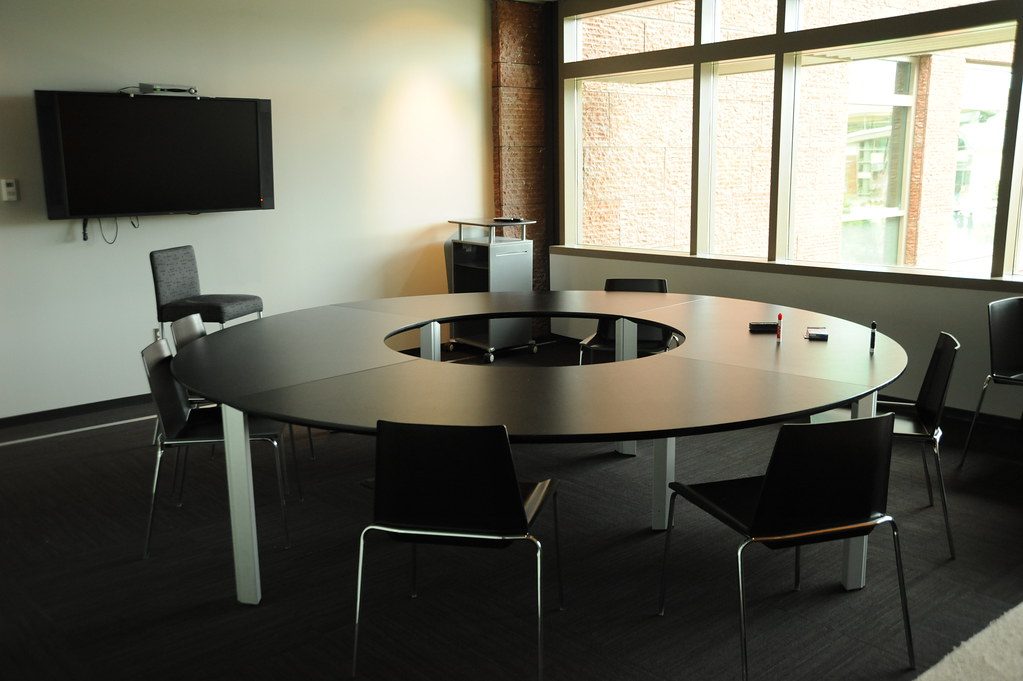
Boardroom AV is often decided too late.
The table is ordered. The room is painted. The screen wall is finished. Then someone asks where the HDMI cable, USB-C input, laptop power, microphone cable or network point should go.
At that stage, the clean solution may already be gone.
The table is part of the AV system
A boardroom table is not only furniture.
It decides where people sit, where laptops open, where cables emerge, where microphones can sit and whether the room feels tidy during a meeting. If the table is built without AV input, the installer may be forced into visible cables or awkward adapters.
The table should be part of the technology conversation.
Cable access must be serviceable
Table boxes, floor boxes and under-table cable routes should be accessible.
Connectors wear. Cables get damaged. Users pull adapters. Cleaning staff move things. If the cable path is sealed inside furniture with no service access, simple repairs become frustrating.
Good furniture design allows maintenance without damaging the table.
USB-C has made planning more important
Many users now expect one cable to handle video, audio, charging and camera connectivity.
That can work well, but only if the system is designed around the actual devices, cable lengths and switching requirements. A random adapter thrown into a table box is not the same as a properly designed meeting input.
The user experience should be tested before handover.
Power points should match seat positions
People plug in where they sit.
If power is only available at one end of the table, meetings become messy. If cables cross walkways, the room becomes unsafe and unprofessional. Power and signal routing should follow the seating plan.
Camera and microphone positions matter too
Modern boardrooms often need video calls, not only screen sharing.
That means camera angle, microphone pickup, speaker position and table layout all affect the meeting. A beautifully built table can still create poor calls if laptops, microphones and people are not positioned sensibly.
The furniture and AV design should support the way the room will be used.
The cleanest room is planned early
The difference between a clean boardroom and a messy one is usually early coordination.
If the furniture maker, electrician and AV installer understand the requirement before manufacturing begins, cable routes can be hidden properly. If the decision happens after the table arrives, the team may be forced into visible surface solutions.
That does not mean the room cannot work.
It means the best opportunity was missed.
DG Technologies’ view
DG Technologies treats boardroom furniture as part of the AV design.
The best meeting rooms do not feel technical.
They simply give people the right connection in the right place, without making the room look like an afterthought.