Many AV faults are blamed on settings, cables or equipment quality.
Sometimes the real problem is heat.
A TV lounge cabinet may look neat from the outside. The doors close. The decoders, Apple TV, HDMI extenders, receiver and network switch disappear. The interior designer is happy. The room looks clean.
Then the system starts behaving strangely.
The screen blacks out. The receiver shuts down during a party. The HDMI extender becomes too hot to touch. Apple TV works sometimes and drops out at other times. The verandah TV loses picture. The client reboots everything and it works for a while, then fails again.
That kind of intermittent fault is exactly why DG Technologies treats ventilation as part of AV installation and network infrastructure, not as an optional extra.
Hidden equipment still produces heat
AV equipment does not stop producing heat because it is hidden.
Receivers, amplifiers, decoders, HDMI extenders, network switches and streaming devices all generate heat. Some generate a little. Some generate a lot. Put several of them into a closed cabinet with poor airflow and the temperature can climb quickly.
South African conditions make this worse.
Many KZN homes have warm rooms, west-facing entertainment areas, enclosed joinery and outdoor verandah systems that work hard during humid summer evenings. Add a big rugby day, a party or a long movie session, and the equipment may be running for hours.
Heat turns a neat cabinet into a reliability problem.
HDMI faults can look random
HDMI problems are often difficult for clients to describe.
They may say:
- the picture flashes on and off
- there is video but no audio
- the screen goes black
- one source works but another does not
- DSTV works but Apple TV does not
- the issue gets worse after the system has been on for a while
Those symptoms can be caused by HDCP negotiation, cable quality, resolution mismatch, extender quality, firmware or source settings.
They can also be caused by equipment running too hot.
When an HDMI extender, receiver or source device heats up, it can become unstable. The fault may disappear after the system cools down, which makes the client think it has fixed itself.
It has not.
Cabinets need airflow paths
Ventilation is not simply drilling a few holes.
A cabinet needs an airflow path. Cool air must enter. Warm air must leave. If the cabinet only has random openings, heat may still collect around the equipment.
Depending on the installation, a proper solution may include:
- open rear sections
- ventilation slots
- extractor fans
- low-noise cabinet fans
- equipment spacing
- mounting hot devices away from each other
- moving HDMI extenders out of heat pockets
- avoiding sealed shelves around receivers
- rack-style ventilation where the system is larger
The exact answer depends on the furniture and equipment.
A receiver needs more space than a decoder
Not all equipment can be treated the same.
A small streaming box can often tolerate a modest space. A large AV receiver or power amplifier needs more room. It may have heatsinks, output stages and internal airflow assumptions that do not work inside a sealed cupboard.
When two sets of speakers, outdoor zones or long listening sessions are involved, the receiver may work harder.
That is when a lack of ventilation becomes obvious.
The cabinet may look premium, but the electronics are operating in a poor environment.
Outdoor TV systems often add heat points
Outdoor and verandah TV systems often rely on hidden sources and signal distribution.
A decoder or Apple TV may sit inside a lounge cabinet. The signal may travel through an HDMI extender over network cable to a verandah TV. There may be a transmitter in the cabinet and a receiver behind the TV.
That means heat can exist in multiple places.
If the transmitter sits next to decoders and an AV receiver, it may overheat. If the receiver behind the TV has no airflow, it may also become unstable. If the cable path is marginal, the heat-related failure becomes harder to diagnose.
This is why outdoor TV planning should include signal path, cable path, power, ventilation and service access.
Good installation means thinking about maintenance
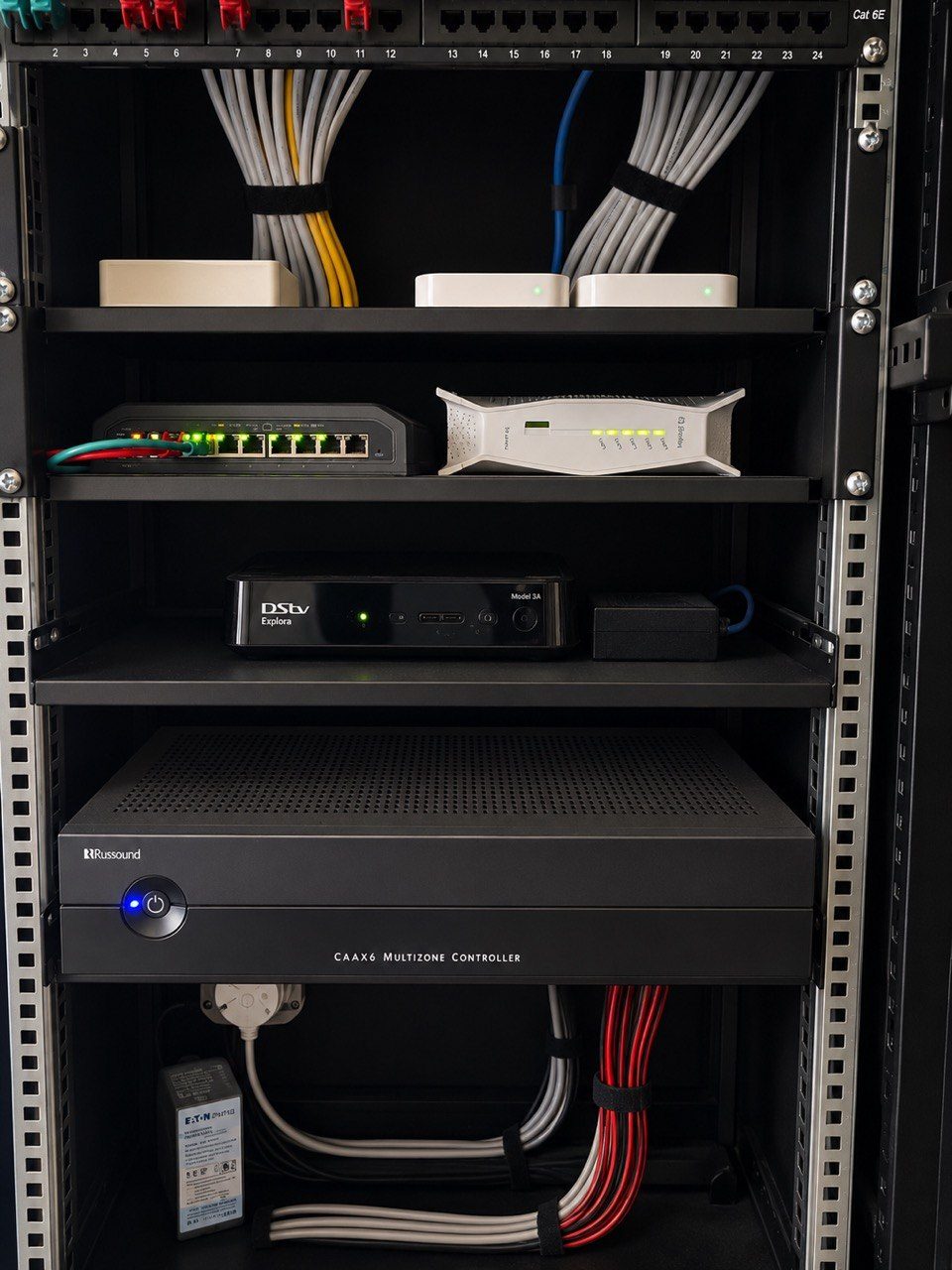
The best AV cabinet is not the one where everything is crammed out of sight.
The best cabinet is the one that looks clean, works reliably and can be serviced.
That means:
- labels are readable
- cables are not tangled
- equipment can be removed
- fans can be accessed
- extenders are not buried
- power supplies are identifiable
- airflow is not blocked
When equipment is packed too tightly, every future fault becomes harder to solve.
Heat is cheaper to prevent than diagnose
Intermittent AV faults waste time.
They often happen when the client is using the room, not when the technician is standing there. That makes them frustrating to reproduce.
Preventing heat problems during design is usually cheaper than chasing random faults later.
At DG Technologies, we would rather discuss cabinet ventilation early with the cabinet maker, interior designer or builder than apologise later for a beautiful cabinet that slowly cooks the equipment inside it.
Good AV design is not only about picture and sound.
It is also about giving the equipment a stable place to live.