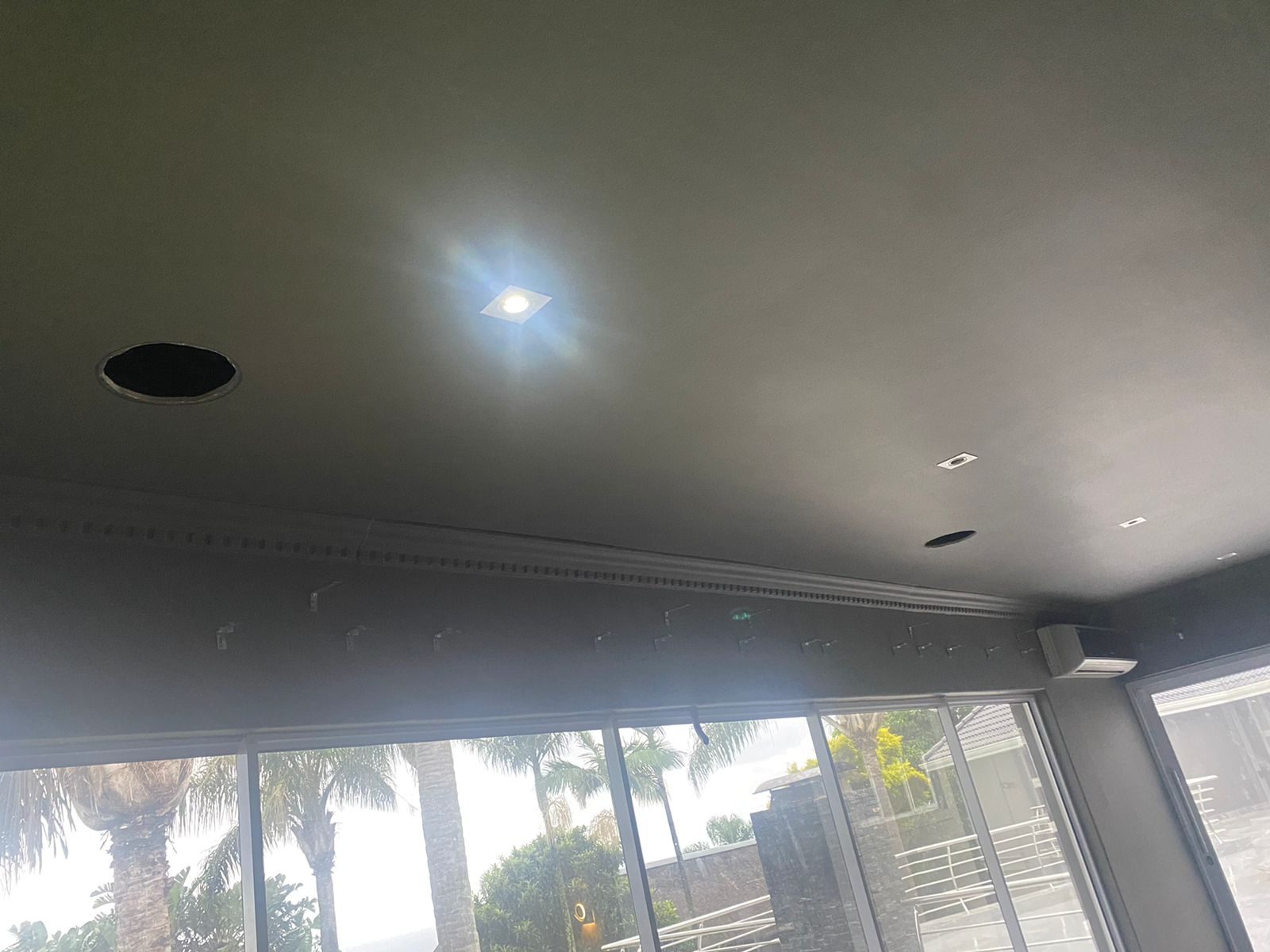
A projector is not finished just because the image looks good on handover day.
It will need future access.
That may be for cleaning, filters, alignment, firmware, cabling, troubleshooting or replacement. If the projector is hidden inside a ceiling detail or tight bulkhead, the handover should explain exactly how it can be serviced.
Hidden projectors still need maintenance
Interior design often wants the projector to disappear.
That can be done well, but only if access is planned. A beautifully hidden projector becomes a future problem if nobody can reach the lens, filter, cable path, mount or power point without damaging finishes.
The handover should protect that future service path.
Service access should not depend on memory
The installer may remember where the panel opens.
Five years later, that memory may not help the next technician. Staff may have changed. The owner may not know which trim piece is removable. A decorator may have painted over a joint. A future contractor may not know there is equipment behind the panel.
The record matters.
The handover should include practical details
A useful projector handover note may include:
- access panel location
- mount type
- power location
- signal cable route
- ventilation path
- filter or cleaning access
- lens position
- alignment notes
- replacement constraints
That information can save time later.
Heat and access are linked
Projector heat is not only a design issue.
It is also a maintenance issue. If a projector runs hot, the service team must be able to inspect the enclosure, airflow and dust condition.
We discuss the design side in why projector noise and heat should be planned before mounting.
DG Technologies documents the service path
Premium cinema design should look clean.
It should also be supportable.
A hidden projector with no recorded access path is not a clean installation. It is a future surprise.