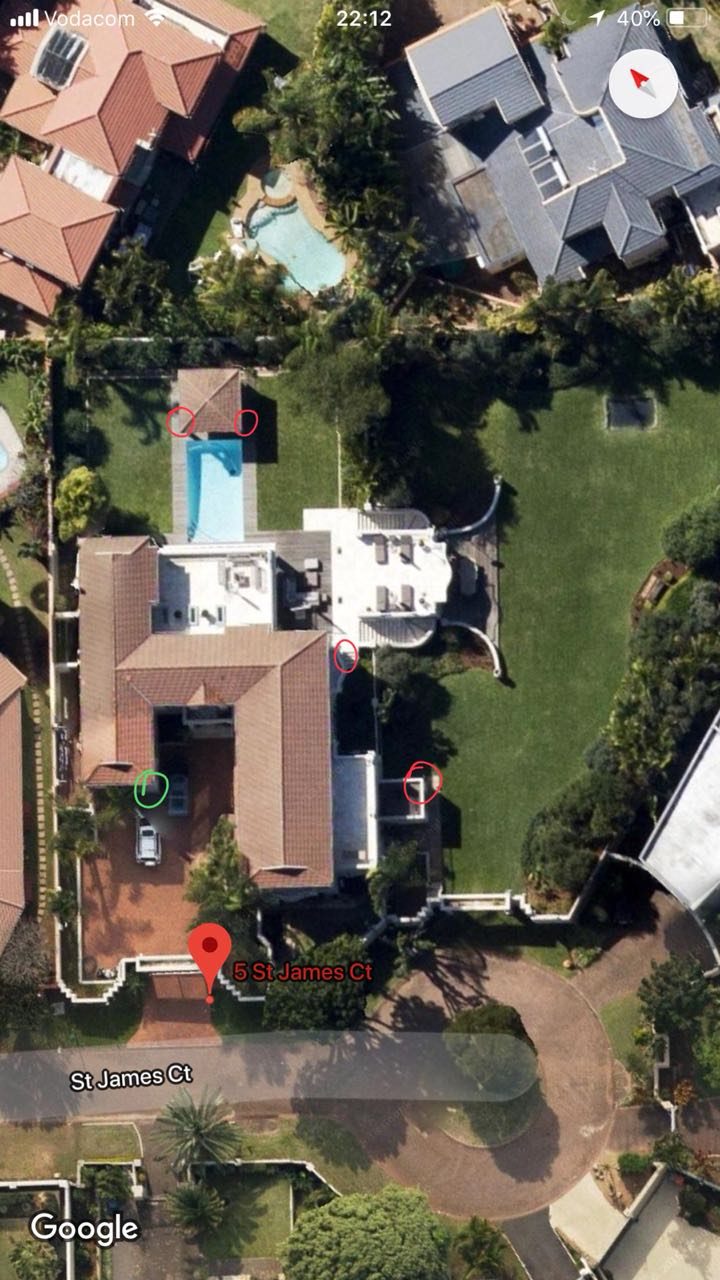
Deliveries are not the same as invited guests.
They happen quickly. They often happen while the owner is busy or away. They may involve drivers who do not know the property, staff who are unsure of the procedure and gates that need to open only as much as necessary.
Premium homes need a separate delivery-access plan.
The delivery route should be intentional
A delivery should not automatically send someone through the same route used by family or formal visitors.
There may be a service entrance, staff gate, side route, delivery cupboard, guardhouse procedure or designated handover point. That route should be understood by the access-control system, cameras and household staff.
If the route is unclear, people improvise.
Cameras and intercoms should support the decision
The person granting access should be able to see what they need to see.
That may include the driver’s face, vehicle, package area, gate position and driveway context. A single wide camera may not be enough if the goal is to confirm who is there and what they are doing.
Access decisions need visual context.
Temporary codes should stay temporary
Some delivery or contractor access may require temporary codes or limited access.
Those codes should not remain active forever. They should be named, limited and reviewed. A code created for convenience during construction or move-in should not become a permanent security weakness.
Convenience without review becomes risk.
Staff need a simple procedure
House staff should not have to invent the process each time.
They should know which gate to use, when to call the owner, where deliveries should be left, whether drivers are allowed past a certain point and what to do if the intercom or app fails.
Simple procedures make the technology more useful.
Estate rules may affect the plan
In secure estates, delivery access may also depend on estate security, guardhouse procedures, contractor registration and working-hour limits.
The house-side access plan should work with those rules rather than fighting them.
DG Technologies treats access as a real-world process
At DG Technologies, we do not design access control only around buttons and locks.
We look at how people arrive, who approves entry, what cameras show, what staff understand and how the property should remain private.
Delivery access needs its own plan because it is one of the most common ways a private home interacts with the outside world.