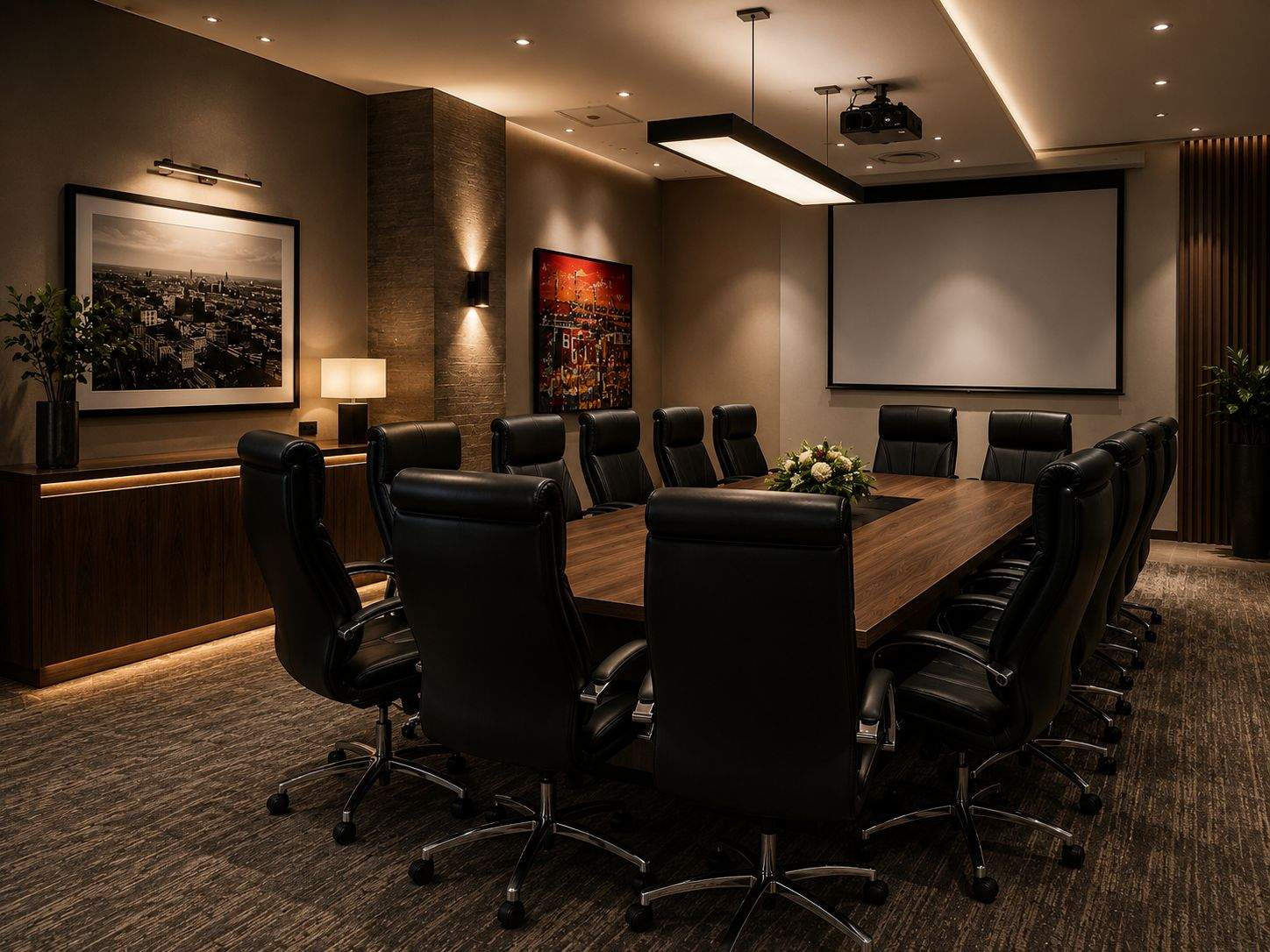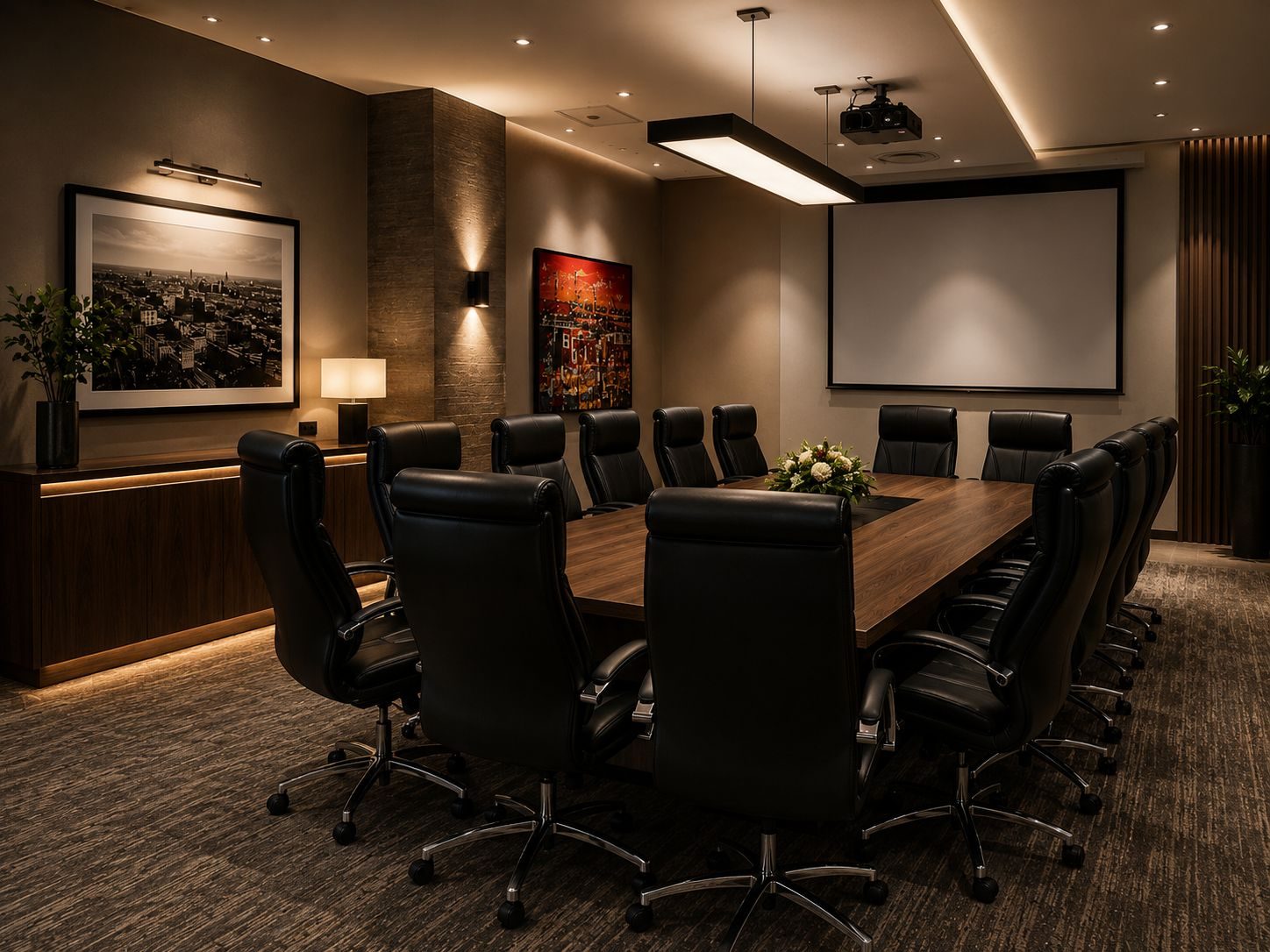
Boardroom technology often fails in a very specific way: the room looks impressive, but the first person trying to start a meeting loses time working out inputs, displays, audio routing or wireless presentation steps.
That is usually a design failure, not a user failure.
Simplicity is part of the specification
Meeting-room systems are used under pressure. Guests are waiting, a presentation needs to start and nobody wants a five-minute orientation session. The control layer should reduce decisions, not add them.
For that reason we prefer a room flow that is obvious:
- walk in
- start the display or projector
- connect or present wirelessly
- control volume without hunting
If that sequence is not clear, the technology is doing too much or exposing too much of its underlying complexity.
Reliability usually lives in the infrastructure
Boardroom issues are not always caused by the visible AV gear. We often find unstable switching, weak wireless coverage, poorly planned cable paths or presentation hardware that was added piecemeal over time. Those problems stack up until the room becomes unpredictable.
At Royal Palm Hotel, the upgrade was not only about fresh equipment. It was about reviewing what already existed, simplifying the signal path and making the presentation workflow dependable for staff who are not technical operators.
What matters most in practice
A boardroom system should deliver:
- clear display switching
- stable laptop and conferencing connectivity
- intelligible speech reinforcement
- straightforward volume control
- predictable room startup
Those are basic requirements, but they are where many rooms underperform.
The standard we work to
Our target is a room that needs very little explanation. Staff should be able to host confidently, guests should not be distracted by the system, and support calls should be the exception rather than the operating model.
That usually means fewer layers on screen, cleaner integration between AV and networking, and a commissioning process that checks the room the way real users will experience it.
When a boardroom works properly, nobody comments on the technology. The meeting simply starts on time.